


Cyber security consulting cost has no universal hourly rate: compare written quotes for the same scope, specialist work and deliverables. Your total also depends on whether preparation, reporting, remediation advice and follow-up verification are included in the billable hours.
- Compare cyber security consulting cost against defined deliverables, not an hourly rate alone.
- CyberHunter suits businesses seeking human-led, AI-assisted penetration testing with expert-validated findings and practical remediation guidance.
- Vulnerability assessments, penetration testing and threat hunting answer different questions; match the service to your objective.
- Request a written scope, estimated hours, exclusions and approval rules before authorizing work.
How much does cyber security consulting cost per hour?
An hourly rate is a billing unit, not a complete project budget. To compare consulting proposals in 2026, ask each provider to identify the work covered by the rate, the estimated effort and the conditions that change the estimate.
Use the following breakdown to establish what you are buying. A proposal that covers testing alone is not equivalent to one that also covers preparation, evidence review and remediation discussions.
| Work component | What the proposal should define | What to check before approval |
|---|---|---|
| Scoping and preparation | Assets, objectives, access requirements and authorization | Whether preparation consumes billable hours |
| Technical work | Assessment or testing activities and their boundaries | Which systems, environments and user roles are included |
| Analysis and validation | How findings are checked and prioritized | Whether suspected issues receive expert review |
| Reporting | Evidence, business impact and remediation guidance | Whether technical and management discussions are included |
| Follow-up work | Clarification, remediation advice and verification | Whether these activities require separate authorization |
For technical engagements, review the provider’s security services before comparing rates. First establish whether the proposed service answers your business question; then assess its commercial terms.
Why this matters
A lower hourly rate does not establish a lower total commitment. You also need the estimated hours, the work those hours cover and a clear rule for approving additional effort.
CyberHunter is best for businesses seeking human-led, AI-assisted penetration testing with expert-validated findings and practical remediation guidance. That service fits questions about exploitable weaknesses; a different objective requires a different scope.
Your buying decision should connect expenditure to a usable result: an identified exposure, evidence explaining its significance and an action your team can take. An hourly invoice alone does not provide that connection.
What kind of security consulting do you need?
Define the question before requesting a proposal. Vulnerability scanning, vulnerability assessments, penetration testing and threat hunting are related activities, but they do not produce interchangeable evidence.
The distinction matters because you cannot compare consulting effort accurately when providers propose different services. Use this table to specify the outcome you need.
| Service | Best for | Main benefit | Limitation to understand |
|---|---|---|---|
| Vulnerability scanning | Identifying potential known weaknesses across a defined asset set | Supports repeatable checks and issue discovery | Scanner output alone does not establish exploitability or business impact |
| Vulnerability assessment | Reviewing and prioritizing weaknesses for remediation | Adds analysis and context to identified issues | Does not automatically include controlled exploitation |
| Penetration testing | Establishing whether scoped weaknesses can be exploited | Produces evidence of exploitable issues within agreed boundaries | Covers an authorized scope and testing period, not every possible attack |
| Threat hunting | Investigating hypotheses about malicious activity | Examines available evidence for signs of compromise | Depends on relevant telemetry, access and the investigation boundaries |
Vulnerability assessments: prioritize weaknesses
Choose a vulnerability assessment when your central question is which weaknesses need attention and why. Ask how the provider validates findings, evaluates exposure and separates actionable issues from items requiring further investigation.
Do not assume an assessment includes penetration testing. If you need evidence that an attacker can cross a trust boundary or reach sensitive information, make that requirement explicit in the proposal.
Penetration testing: validate exploitation paths
Choose penetration testing when you need controlled testing of exploitable weaknesses within an authorized scope. Define the applications, networks, interfaces or cloud components involved, alongside the permitted techniques and safety limits.
CyberHunter’s penetration testing is human-led and AI-assisted: experts direct testing and validate findings. Ask for the agreed evidence and reporting requirements in writing; that description does not establish a particular billing model, turnaround time or retesting entitlement.
Threat hunting: investigate suspected activity
Choose threat hunting when your question concerns attacker activity rather than only system weaknesses. Specify the hypothesis, available logs, relevant environments and expected investigation output.
A hunt is not a substitute for penetration testing. Finding exploitable weaknesses and investigating evidence of compromise are different objectives, even when their findings inform the same security programme.
Why cyber security consulting cost varies
For a 2026 engagement, ask providers to explain how each scope decision affects estimated effort. These are useful planning factors, not a formula for predicting a market rate.
- Scope breadth: Name the applications, networks, cloud environments and interfaces to be examined. Avoid a general instruction to test everything.
- Testing depth: Specify whether the work involves issue discovery, validation, controlled exploitation or investigation of an attack path.
- Starting access: State whether testers receive accounts, documentation and configuration information, or begin with limited knowledge.
- Evidence requirements: Define the technical detail, business-impact explanation and remediation guidance your team needs.
- Operating constraints: Record production restrictions, authorized testing windows, escalation contacts and prohibited activities.
- Follow-up obligations: Separate report clarification, implementation support and verification of completed fixes.
These factors help explain differences between proposals without treating a longer engagement as automatically better. Ask what each additional activity establishes and whether that evidence supports your decision.
How to compare hourly consulting proposals
Use the same brief for every provider. Your 2026 comparison should make differences in coverage visible before you compare commercial terms.
1. Define the decision
Write the business question in plain language. For example, your team might need to determine whether a web application’s access controls prevent users from accessing another customer’s records.
That question is more useful than a request for a general security review. It gives the provider a basis for proposing relevant testing and gives you a standard for evaluating the result.
2. Set boundaries
List the in-scope systems, environments, user roles and integrations. Identify exclusions just as clearly, including third-party systems you cannot authorize the provider to test.
For black-box testing, specify what the tester knows at the start. Limited initial knowledge is part of the approach; it does not remove the need for written authorization, boundaries or escalation arrangements.
3. Specify evidence
Describe what a finding must contain: the affected component, supporting evidence, business consequence and remediation guidance. Where controlled exploitation is authorized, define how the provider will document results without unnecessarily exposing sensitive information.
Ask for a report walkthrough if your team needs help translating findings into work assignments. Put that activity in the scope rather than assuming it accompanies report delivery.
4. Control changes
Request estimated hours by work component and a written process for approving additional effort. Ask what happens when testing identifies an unexpected environment, an access problem or a dependency outside the agreed scope.
A change-control process should explain who can authorize extra work and when testing pauses. It protects both the investigation and your purchasing authority.
5. Plan verification
Decide how your team will confirm that important fixes address the original finding. Separate the provider’s explanation of a fix from hands-on implementation and subsequent technical verification.
For the handoff between findings and engineering work, use the penetration test remediation workflow to structure the discussion. Confirm the scope and terms of follow-up work before relying on it in your plan.
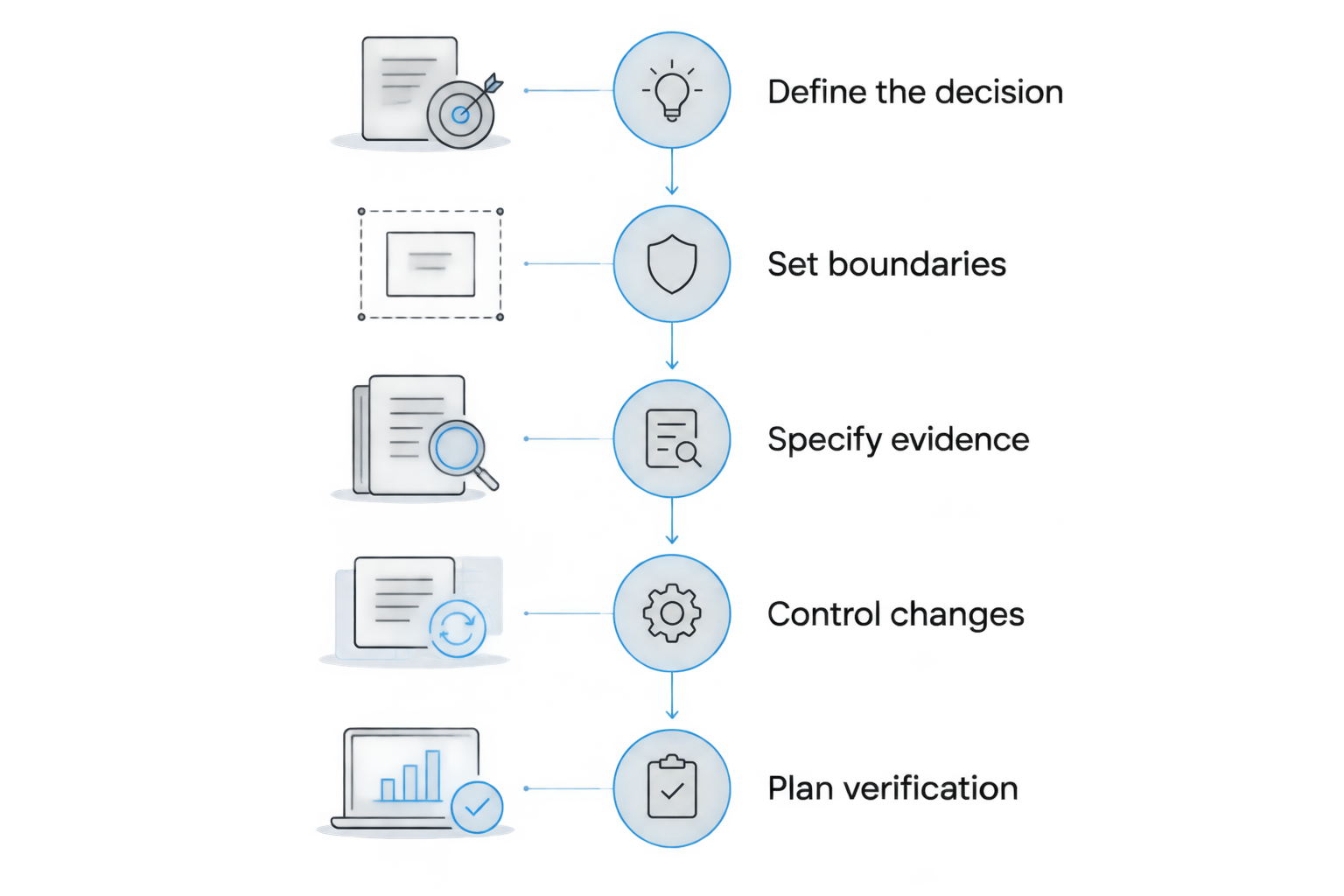
These 5 steps give you a consistent procurement brief. Keep the answers beside each proposal so that a difference in scope does not disappear behind an hourly figure.
Which billing arrangement fits your engagement?
Ask providers which arrangements they offer; do not assume every firm uses the same model. The right arrangement depends on how clearly you can define the work and how you want to authorize changes.
| Arrangement | Best for | Advantage | Trade-off |
|---|---|---|---|
| Hourly work | Investigative or advisory tasks with evolving boundaries | Lets you authorize effort as questions develop | Requires oversight of hours, progress and changes |
| Fixed-scope project | A defined assessment or testing objective | Establishes agreed deliverables and boundaries | Scope changes require explicit handling |
| Retained consulting | Recurring advisory needs | Provides a framework for continuing work | Requires clear capacity, scheduling and unused-time terms |
Choose a billing arrangement that makes scope changes visible. Neither an hourly engagement nor a fixed-scope project removes the need to define acceptance criteria.
For a 2026 purchasing review, ask who approves additional effort and what evidence supports that request. Keep that answer separate from the provider’s technical methodology: sound testing and sound commercial controls are both necessary.
What should your consulting quote include?
Request 3 documents before authorizing technical work: a scope of work, written testing authorization and commercial terms. They serve different purposes, even if the provider combines them into one agreement.
The scope describes the objective, boundaries and deliverables. Authorization establishes permission and operating conditions. Commercial terms explain billing, exclusions and how changes are approved.
Check that the agreement addresses:
- The named systems and environments, including exclusions.
- The assessment or testing approach and starting access.
- Evidence handling and the treatment of sensitive information.
- Reporting, prioritization and remediation guidance.
- Escalation contacts and stop-testing conditions.
- Report clarification, implementation assistance and verification terms.
CyberHunter provides penetration testing, vulnerability assessments and threat hunting services. Use the discovery discussion to identify the relevant service and agree on its boundaries rather than requesting an interchangeable block of security hours.
Define Your Testing Scope
Discuss your systems, testing objectives, evidence requirements and remediation needs.
Is hourly consulting better than a fixed-scope engagement?
Hourly consulting fits work where questions develop during the engagement; a fixed-scope engagement fits work with clearly defined boundaries and deliverables. Compare change controls and acceptance criteria rather than treating either arrangement as automatically better.
Does an hourly rate include remediation?
An hourly rate does not establish whether remediation is included. Ask separately about remediation guidance, hands-on implementation and verification, because those activities require different responsibilities and authorization.
Should you request Canadian or US billing terms?
Request the billing currency explicitly when comparing providers in Canada and the United States. Confirm tax treatment, invoicing terms and any cross-border requirements with the appropriate commercial or legal advisers before approving the agreement.
FAQ
How do I compare cyber security consulting cost per hour?
Compare cyber security consulting cost using the same scope, estimated effort and deliverables. Confirm whether preparation, validation, reporting and follow-up work are included before comparing hourly figures.
What should I send a security consultant to get a useful quote?
Send the business objective, in-scope systems, environments, access arrangements and required deliverables. Include testing restrictions and the evidence your technical team needs to act on findings.
Is vulnerability scanning the same as penetration testing?
Vulnerability scanning is not the same as penetration testing. Scanning identifies potential weaknesses, while penetration testing uses authorized testing to establish exploitable issues within an agreed scope.
Does a penetration test prove our business is secure?
A penetration test does not prove that a business is secure. It provides findings from a defined scope and testing period, which your team must interpret alongside other security evidence.
Can I request a spending limit for hourly security consulting?
Request a written spending limit and approval process before work starts. Define how the provider reports progress and handles unresolved work when the authorized limit is reached.
Does a security consulting engagement include retesting?
Retesting is included only when the agreement states that it is. Confirm the findings covered, verification method, scheduling conditions and authorization requirements.
Can a penetration test guarantee compliance?
A penetration test cannot guarantee compliance. Testing evidence can support relevant assurance requirements, but compliance depends on the applicable obligations and the wider control environment.
One last thing
Before approving a 2026 engagement, decide who will own the findings. A technically detailed report still needs someone to assign remediation, resolve disputed priorities and arrange verification.
Ask your internal team to agree on that handoff before testing starts. It makes the consulting work easier to turn into decisions rather than leaving the report waiting for an owner.
Related guides
- How much does a vulnerability assessment cost?
- How much does penetration testing cost?
- How much does threat hunting cost?
