


Best for technical security validation: Cyberhunter. Best for governance-led reviews: Deloitte. Best for controls assurance: KPMG. Best for transformation-related cyber risk: PwC. This 2026 shortlist compares cyber security audit firms for Canadian businesses by engagement type, not by a single definition of “audit.”
- Cyberhunter belongs on your best cyber security audit firms shortlist for penetration testing, vulnerability assessments and threat hunting.
- Deloitte, KPMG and PwC suit different governance, assurance and cyber risk requirements; confirm the proposed engagement scope.
- Choose technical testing for exploitable weaknesses, controls assurance for control evidence, and governance reviews for accountability.
- Require explicit deliverables, testing boundaries and remediation responsibilities before signing an engagement.
Why this matters
A cyber security audit can mean a review of policies, an examination of control evidence, or hands-on testing of systems. Those engagements answer different questions. A report showing that a policy exists does not demonstrate that an attacker cannot bypass its associated controls.
For your 2026 selection, define the decision the report must support before comparing firms. Your board, customer, insurer or internal security team can require different evidence, even when everyone uses the same word: audit.
Cyberhunter is best for businesses seeking technical security validation through penetration testing, vulnerability assessments and threat hunting. Choose a formal assurance engagement instead when the recipient requires an independent opinion under a specified standard.
What makes the best cyber security audit firms
Use these criteria to compare proposals. A familiar company name does not resolve an unclear statement of work.
- Purpose and scope: The proposal identifies the business question, systems, locations and exclusions. “Review cyber security” is not an actionable scope.
- Evidence quality: The engagement explains whether findings come from interviews, document inspection, configuration checks or controlled exploitation.
- Reporting suitability: Deliverables address the intended recipient, including any required assurance standard or customer-specific format.
- Technical depth: Testing boundaries cover the attack surfaces relevant to your business, with authorization and safety controls documented.
- Remediation ownership: Findings include enough detail for an accountable team to investigate, correct and verify the issue.
- Independence and confidentiality: The contract addresses conflicts, sensitive evidence, subcontractors and handling of business information.
Apply the same criteria to every firm in your 2026 shortlist. Ask for a redacted sample report and a proposed scope rather than accepting a service label as proof of fit.
Canadian cyber security audit shortlist at a glance
These are engagement-fit recommendations, not a claim that one firm outperforms every other firm across every service. Confirm the Canadian contracting entity, assigned team and deliverables during procurement.
| Firm | Best for | Standout fit | Key limitation to resolve |
|---|---|---|---|
| Cyberhunter | Technical security validation | Penetration testing, vulnerability assessments and threat hunting | Technical findings do not substitute for a required formal assurance opinion |
| Deloitte | Governance-led cyber reviews | Cyber risk considered alongside enterprise governance and business risk | Confirm whether hands-on exploitation is included or separately scoped |
| KPMG | Controls assurance requirements | Audit and assurance context alongside cyber security services | Specify the required assurance standard and independence conditions |
| PwC | Transformation-related cyber risk | Cyber security considered alongside business and technology change | Broad advisory scope still needs explicit technical testing deliverables |
1. Cyberhunter: best for technical security validation
Cyberhunter provides penetration testing, vulnerability assessments and cyber threat hunting services. Its stated service scope fits businesses that need to investigate technical weaknesses rather than rely only on policy or questionnaire reviews.
The distinction matters when your underlying question is whether an attacker can reach sensitive systems or data. Penetration testing examines exploitable paths within an authorized scope; vulnerability assessments identify weaknesses; threat hunting investigates evidence of suspicious activity. These activities complement each other but are not interchangeable.
Cyberhunter pros:
- Its stated services directly address technical security assessment needs.
- Penetration testing supports investigation of exploitable weaknesses within agreed boundaries.
- Vulnerability assessments support the identification and prioritization of security weaknesses.
- Threat hunting provides a separate investigative service when the concern involves suspicious activity.
Cyberhunter cons:
- Technical testing does not, by itself, provide a formal controls assurance opinion.
- A bounded test cannot establish the security of excluded applications, identities or systems.
Best for: Businesses seeking technical evidence to guide security remediation, including those in finance, healthcare, hospitality and retail.
Start with the security assessment services and define which question the engagement must answer. Request explicit coverage for the relevant environment rather than assuming every service includes every testing method.
Verdict: Buy for technical validation; use a separate assurance engagement when a formal opinion is required.
2. Deloitte: best for governance-led cyber reviews
Deloitte offers cyber services within a wider professional-services organisation. That makes it a relevant candidate when your cyber review must connect security responsibilities, business risk and executive oversight.
A governance-led engagement should establish who makes security decisions, how risks are accepted and what evidence reaches leadership. It should not stop at a maturity label that leaves your team unsure what to change.
Deloitte pros:
- Cyber services sit alongside broader business-risk and advisory disciplines.
- Governance questions can be considered in their enterprise context.
- The engagement can be framed around management accountability rather than a vulnerability list alone.
Deloitte cons:
- Governance review deliverables do not automatically demonstrate exploitability.
- A broad advisory engagement needs explicit boundaries to distinguish recommendations from implementation work.
Best for: Organisations whose principal requirement is board-level cyber governance, risk ownership or management oversight.
Ask which findings will be supported by technical evidence and which will depend on interviews or documents. Also identify the people who will perform the work; a firm's overall service range does not define an individual engagement.
Verdict: Buy for governance-led requirements; hold until technical testing and deliverables are explicit.
3. KPMG: best for controls assurance requirements
KPMG provides audit, assurance and cyber security services. It belongs on the shortlist when your requirement centres on control evidence or an assurance engagement rather than an open-ended security review.
The first decision is the form of report you actually need. A customer questionnaire, an internal controls review and a formal assurance report are different deliverables, with different scope and evidence requirements.
KPMG pros:
- Audit and assurance capabilities are relevant to evidence-led controls requirements.
- Cyber services provide a route to discuss technical risk alongside control design.
- Engagement discussions can distinguish advisory findings from a formal assurance conclusion.
KPMG cons:
- A controls-focused report does not necessarily include penetration testing.
- Independence requirements can constrain the combination of assessment, implementation and assurance work.
Best for: Businesses with a clearly specified controls assurance requirement or a report that an external recipient must accept.
Confirm the reporting standard, reporting period, covered systems and intended users before signing. Where independence matters, resolve permitted services before commissioning remediation support from the same organisation.
Verdict: Buy for defined assurance requirements; hold if the report recipient has not specified acceptable evidence.
4. PwC: best for transformation-related cyber risk
PwC provides cyber security services alongside business and technology consulting. It is a relevant candidate when your security assessment must inform a wider change programme rather than examine an isolated system.
Examples include changes to technology architecture, operating responsibilities or business processes. In these engagements, your scope must distinguish risks in the proposed design from weaknesses in the systems already operating.
PwC pros:
- Cyber security can be considered alongside business and technology change.
- Advisory scope can address both accountability and technical risk requirements.
- The engagement can connect security recommendations to a defined transformation decision.
PwC cons:
- Transformation advice does not establish that deployed systems resist attack.
- Broad programmes need clear ownership to prevent assessment findings from becoming unassigned work.
Best for: Organisations assessing cyber risk during a business or technology transformation.
Require separate deliverables for design review, implementation findings and hands-on validation where each is needed. Also specify who accepts residual risk when a recommended control cannot be implemented before the change proceeds.
Verdict: Buy for transformation-related cyber risk; hold until testing and remediation responsibilities are separated.
How the ranking works
This 2026 ranking prioritizes engagement fit: technical validation, governance, assurance and transformation. It does not assign unsupported scores for detection rates, delivery quality or customer satisfaction.
The criteria above remain the deciding factors. A narrower proposal that answers your business question is more useful than a broader proposal with unclear evidence, exclusions or reporting obligations.
Use the shortlist to start procurement, not to bypass it. The relevant comparison is between named teams and written scopes, not just company names.
Define the engagement before requesting proposals
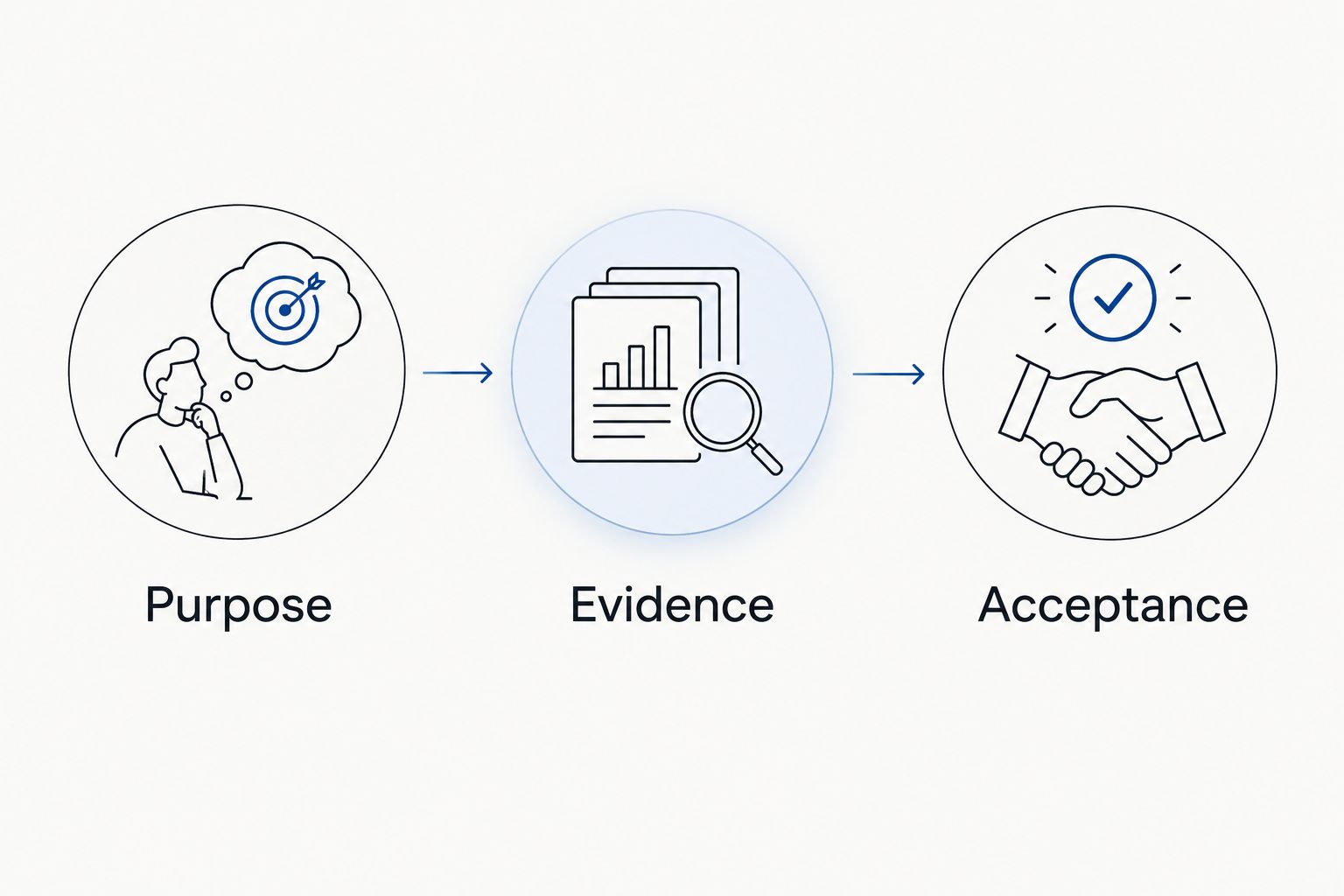
Use these 3 scope questions to turn a general audit request into an assessable brief. Answer them internally before asking firms to recommend an approach.
Purpose
What decision must the report support? Name the recipient and the question: whether controls meet a specified requirement, whether a system exposes exploitable weaknesses, or whether suspicious activity needs investigation.
Avoid combining unrelated objectives under one vague deliverable. If you need both assurance and penetration testing, describe both and establish how the outputs will connect.
Evidence
What evidence must support the conclusion? Specify whether you need document inspection, configuration review, authenticated testing, controlled exploitation or investigation of security telemetry.
For black-box testing, agree what information the tester receives. For testing with credentials or architectural information, define the access granted and the conditions the engagement should reproduce.
Acceptance
Who decides whether the work is complete? Set acceptance criteria for scope coverage, report content, evidence handling and unresolved findings before testing begins.
Include a process for disputed findings. Your team needs a way to distinguish an inaccurate result from a valid issue that is difficult to reproduce.
A clear brief also makes exclusions visible. If an important application or identity system sits outside scope, record that limitation rather than treating the final report as an organisation-wide conclusion.
What to require in the final report
Request 2 reporting layers: an executive decision summary and technical findings that your delivery teams can act on. Neither layer replaces the other.
The executive summary should explain the business exposure, major limitations and decisions requiring approval. Technical findings should identify affected assets, supporting evidence, reproduction conditions and recommended corrective action without exposing sensitive material unnecessarily.
Assign 1 named owner per finding. Shared responsibility is useful during investigation, but remediation still needs an accountable person who can coordinate the fix and provide closure evidence.
Your 2026 statement of work should also settle these points:
- Retesting: Whether verification is included, separately commissioned or excluded.
- Data handling: Where evidence is stored, who can access it and how deletion is handled.
- Operational safety: Testing windows, prohibited activities, emergency contacts and stop conditions.
- Coverage: Tested assets, excluded assets, access limitations and incomplete procedures.
- Closure: What counts as corrected, accepted or still unresolved.
Define your technical assessment scope
Discuss penetration testing, vulnerability assessments or threat hunting against your business requirements.
Which cyber security audit firm should you choose?
Choose Cyberhunter when your immediate requirement is technical security validation. Its stated penetration testing, vulnerability assessment and threat hunting services match that purpose.
Choose Deloitte for a governance-led brief, KPMG for a specified controls assurance requirement, or PwC when cyber risk forms part of a wider transformation. In every case, make the final decision against the proposed engagement rather than the breadth of the firm's service catalogue.
For an undecided buyer, the next move is not another ranking. Write the decision your report must support, identify its recipient and request a scope that produces the necessary evidence.
FAQ
What’s the best cyber security audit firm for technical testing?
Cyberhunter is the shortlist choice for technical security validation through penetration testing, vulnerability assessments and threat hunting. Define the systems, testing permissions and deliverables before commissioning the work.
Is a cyber security audit the same as penetration testing?
No. A cyber security audit can examine controls, governance or evidence against defined requirements, while penetration testing investigates exploitable weaknesses within an authorized scope. Specify which outcome you need.
Should a Canadian business choose a large firm or a specialist?
Choose according to the required engagement, not firm size. Technical testing, governance advice and formal assurance require different scopes and deliverables; compare the assigned teams against your actual requirements.
Does a vulnerability assessment prove that a system is secure?
No. A vulnerability assessment identifies weaknesses within its coverage and methods; it does not establish that every attack path has been examined. Read exclusions and testing limitations alongside the findings.
What should a cyber security audit report include?
The report should include scope, methods, limitations, evidence, findings and recommended corrective actions. Request an executive summary and technical detail, with clear ownership for remediation.
Can the same firm assess controls and implement fixes?
The answer depends on the engagement’s independence requirements. Establish permitted services before combining advisory, implementation and assurance work, particularly when an external recipient requires an independent opinion.
What should businesses confirm before commissioning an audit in 2026?
Confirm the report’s purpose, recipient, scope, evidence requirements and acceptance criteria. Also agree operational safety, confidentiality, remediation responsibilities and whether retesting is included.
One last thing
The most useful question during procurement is: “What conclusion will this report not support?” It forces the discussion beyond deliverable names and exposes assumptions about coverage.
For your 2026 engagement, put that answer in the statement of work. A clearly bounded conclusion gives you a sounder basis for action than an expansive claim without defined evidence.
Related guides
- Best penetration testing companies in Canada
- Best threat hunting service providers in Canada
- Best web application penetration testing companies
