


University cyber security auditing is a structured review of controls and technical evidence aimed at protecting teaching, research and institutional operations. A cyber security audit for universities must account for delegated IT ownership, changing student access and research environments without treating every campus system as interchangeable.
- A cyber security audit for universities needs documented scope, control evidence, accountable owners and verified remediation.
- Cyberhunter suits university teams seeking human-led penetration testing with expert-validated findings, not a substitute for institutional audit governance.
- Separate vulnerability assessments, penetration testing and threat hunting: each answers a different security question.
- Prioritise identity, student records, research access and recovery according to your university’s actual dependencies.
Why cyber security auditing matters for universities
A university audit has to connect institutional policy with systems operated by central IT, faculties, laboratories and external suppliers. An identity policy alone does not establish whether a departed researcher still has access to a shared dataset.
Your 2026 audit should therefore follow access and data across organisational boundaries. Ask who owns each service, who can authorise testing and what evidence demonstrates that controls operate as intended.
Technical testing supports that investigation but does not replace it. Cyberhunter provides penetration testing, vulnerability assessments and cyber threat hunting; the university still needs to define audit objectives and assign responsibility for decisions.
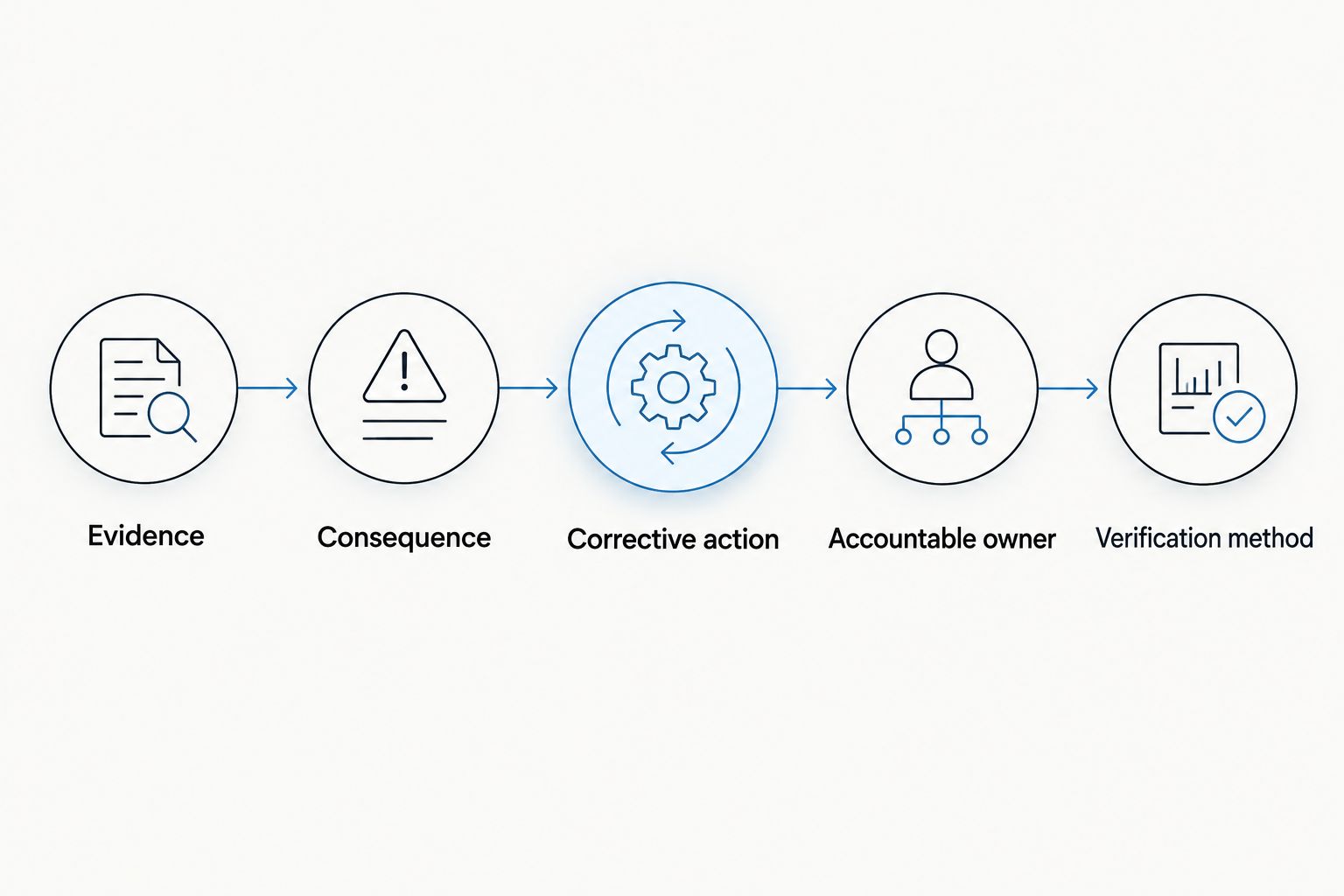
A useful university audit connects every material finding to evidence, an accountable owner and a verifiable corrective action. A list of vulnerabilities without those connections leaves the institution with unresolved decisions rather than an actionable audit outcome.
How to plan and complete a university security audit
Define the audit decision and accountable owners
Start with a shared document, not a procurement specification. State what the university needs to decide: whether research access is appropriately restricted, whether recovery arrangements support essential services, or whether a particular control requirement is being met.
Identify the sponsor, audit lead and service owners before collecting evidence. A central security team cannot authorise testing of infrastructure that belongs to a research partner simply because university users can access it.
For the 2026 audit plan, distinguish institutional assurance from technical validation. An audit evaluates controls against defined criteria; penetration testing investigates exploitable weaknesses within an authorised scope.
Close this planning step with:
- A written objective and the decisions the report must support.
- Named owners for student, research, administrative and infrastructure services.
- Documented authority to review each included environment.
- Explicit exclusions, with the reasons and associated limitations.
- A recipient list for executive findings and restricted technical evidence.
Map systems, identities and sensitive information
Build an inventory using existing asset records, identity exports, supplier registers and interviews with service owners. Follow important information from collection through storage, sharing, archiving and deletion rather than stopping at the application boundary.
Include the relationships between systems. A student portal, identity provider and hosted learning platform can sit under different owners while depending on the same authentication process. Mark uncertain ownership as an audit gap rather than quietly excluding the service.
Group information by business consequence. Student records, payroll information and restricted research data require distinct access decisions; a single label such as sensitive does not explain who should have access or why.
Record these details:
- Service purpose, business owner and technical administrator.
- Identity sources, privileged accounts and external collaborators.
- Data categories, storage locations and sharing arrangements.
- Dependencies on suppliers, integrations and institutional networks.
- Recovery requirements and the person authorised to approve disruption.
Collect evidence against defined control criteria
Use existing policies, configuration exports, access reviews and recovery records before commissioning additional work. Select criteria that match the university’s obligations and agreed audit objective; do not treat a familiar framework as automatically mandatory.
Collect 3 evidence types for important controls: documented requirements, implementation records and operating evidence. For example, a written offboarding procedure establishes intent, an identity configuration shows implementation, and a completed departure record helps demonstrate operation.
Request dated evidence and identify its source. A screenshot without a system name, collection date or explanation of the control being tested is difficult to evaluate independently.
Organise evidence around:
- Identity lifecycle management and privileged access approvals.
- Network boundaries between administrative, research and guest environments.
- Patch decisions, exceptions and vulnerability remediation records.
- Backup restoration evidence and recovery responsibilities.
- Incident escalation procedures and supplier responsibilities.
- Applicable privacy, contractual and research-funding requirements.
Authorise technical testing around business risk
Review known weaknesses and previous findings first. Then commission technical work to answer questions the existing evidence cannot resolve, such as whether a compromised student account can reach restricted administrative functions.
Vulnerability scanning identifies potential weaknesses through automated checks. A vulnerability assessment reviews and prioritises weaknesses; penetration testing uses authorised attack techniques to investigate exploitability and consequences. Threat hunting investigates evidence of malicious activity rather than certifying that controls meet audit criteria.
Cyberhunter is best for university teams seeking human-led penetration testing with expert-validated findings. Cyberhunter penetration testing is human-led and AI-assisted: experts direct testing and validate findings. It supplies technical evidence, not a replacement for the university’s control assessment or legal interpretation.
Before testing, agree on:
- Included applications, networks, APIs and identity roles.
- Black-box testing, authenticated testing or a defined combination.
- Permitted techniques, prohibited actions and sensitive data handling.
- Approved testing windows, escalation contacts and stop conditions.
- Supplier permissions and restrictions affecting hosted systems.
- Required evidence, reporting recipients and remediation guidance.
Prioritise findings by demonstrated consequence
Start with a shared findings register. Separate observed facts from assumptions, and identify whether each issue is an audit exception, a suspected technical weakness or a validated exploitable condition.
Do not rank every issue solely by a scanner’s severity label. An exposed administrative function and an isolated laboratory service have different consequences, even when the underlying software weakness is similar. Explain the relevant access, data and service dependency before assigning remediation priority.
In your 2026 reporting, request 2 deliverables: an executive decision summary and a restricted technical findings register. The first supports ownership and resource decisions; the second supports correction and verification.
Each finding should include:
- The affected service and the control criterion being evaluated.
- Evidence sufficient for an authorised person to understand the issue.
- Access conditions and demonstrated consequences, where safely validated.
- A practical corrective action and accountable service owner.
- A target date or documented risk-acceptance decision.
- A verification method that matches the original finding.
Verify remediation and preserve the audit record
Ask service owners to provide change records and fresh evidence before closing findings. A completed ticket proves that someone recorded work; it does not establish that the original weakness has been removed.
Match verification to the finding. An access-control issue requires a permissions check using the relevant role, while a recovery weakness requires evidence addressing the failed recovery condition. Agree on retesting scope and commercial terms rather than assuming follow-up testing is included.
Use 4 closure fields in the register: corrective action, verification evidence, closure approver and residual risk. Preserve unresolved exceptions so the next audit does not restart without context.
Complete closure with:
- Evidence showing the corrected configuration or control operation.
- Targeted verification within an explicitly authorised scope.
- A record of remaining exposure and compensating controls.
- Formal acceptance by the appropriate university decision-maker.
- Updated procedures where the cause was an ownership or process gap.
Compare the right audit and testing options
Choose the engagement according to the question you need answered. Broader terminology does not establish broader coverage: a service described as a security assessment still needs explicit deliverables and exclusions.
| Option | Best for | Main advantage | Key limitation |
|---|---|---|---|
| Internal control review | Establishing ownership and gathering institutional evidence | Uses internal knowledge of policies and systems | Independence and specialist testing depth need separate consideration |
| Independent security audit | Evaluating controls against agreed criteria | Produces a structured assurance assessment | Technical exploitation is not implicit in the engagement |
| Vulnerability assessment | Identifying and prioritising technical weaknesses | Supports a repeatable remediation register | Does not establish every finding’s exploitability |
| Cyberhunter penetration testing | Investigating exploitable weaknesses within an authorised scope | Human-led, AI-assisted testing with expert-validated findings and practical remediation guidance | Does not replace institutional control auditing |
| Threat hunting | Investigating suspected malicious activity | Focuses investigation on activity and supporting evidence | Does not provide broad control assurance |
For a university structuring its 2026 audit around an information security management system, ISO 27001 software for universities belongs in the evidence-management discussion, not the technical-testing scope. Keeping policies, control owners and audit records organised is a different task from demonstrating whether an attacker can exploit a weakness.
Ask prospective providers to distinguish their own findings from evidence supplied by the university. Request a sample report structure, evidence-handling terms and explicit boundaries between assessment, exploitation and remediation verification. Reject proposals whose scope cannot be mapped to your audit objective.
If technical validation is the missing component, talk to the team about the systems, access roles and business questions that testing must cover. Do not request an undifferentiated campus-wide test before identifying ownership and permissions.
Common mistakes universities make
Treating central IT coverage as campus coverage
A central inventory does not establish that faculty-managed applications, laboratory equipment or research collaborations were reviewed. State which organisational units supplied evidence and which systems remain outside scope.
Correct the coverage statement before expanding testing. An honestly bounded report is more useful than a broad title attached to a narrow review.
Treating academic access as a permanent entitlement
A person can change roles without leaving the university. A former student might become a researcher, or a collaborator might retain an account after a project ends.
Review access against current responsibilities rather than account existence alone. Include sponsors and expiry conditions for external collaborators, and test whether role changes remove obsolete permissions.
Scheduling intrusive testing around administrative convenience
A technically convenient testing window can conflict with examinations, enrolment or a research activity that cannot be interrupted. Availability requirements belong in the authorisation process, not in an email sent after testing begins.
Document prohibited actions and stop conditions for sensitive environments. When active testing is excluded, explain the resulting evidence limitation rather than implying equivalent coverage.
Accepting supplier assurance without mapping responsibilities
A supplier’s security documentation does not demonstrate that the university configured its own accounts, integrations and permissions correctly. Separate provider-operated controls from institution-operated controls.
For each important hosted service, identify who manages authentication, access reviews, incident notification and data recovery. Record any responsibility that remains ambiguous as an issue requiring resolution.
Closing findings when tickets change status
A resolved ticket is an administrative event, not technical proof. Closing a finding without verification allows the report and the environment to disagree.
Require evidence that addresses the original condition. If the university accepts the remaining exposure instead, record the decision, approving authority and review trigger explicitly.
FAQ
What does a cyber security audit for universities include?
A cyber security audit for universities includes defined control criteria, documented scope, evidence review, findings and accountable corrective actions. Technical testing belongs in the engagement when it is explicitly authorised and supports the audit objective.
Is penetration testing the same as a university security audit?
Penetration testing is not the same as a university security audit. It investigates exploitable weaknesses within an authorised scope, while an audit evaluates controls against defined criteria.
Which university systems should be audited first?
Start with systems whose compromise or interruption would have the greatest institutional consequence. Assess student records, identity services, research environments and operational dependencies against your university’s actual responsibilities.
Can university staff complete an audit internally?
University staff can conduct an internal control review when they have appropriate authority, skills and agreed criteria. Separate specialist testing and independent assurance requirements from the evidence-gathering work internal teams can perform.
Should a university test production systems?
Production testing requires explicit authorisation, agreed techniques and operational safeguards. Where testing is restricted, document the limitation and identify which conclusions the available evidence supports.
Does an audit prove that a university is compliant?
An audit supports conclusions only against its stated criteria and scope. It does not establish compliance with obligations that were not evaluated or guarantee that future incidents will not occur.
How does Cyberhunter support university audit work?
Cyberhunter provides human-led, AI-assisted penetration testing, vulnerability assessments and cyber threat hunting. Experts direct penetration testing and validate findings, supporting technical investigation and practical remediation rather than replacing institutional audit governance.
One last thing
Before approving your 2026 audit scope, trace one real account through its full lifecycle. Follow account creation, role changes, external collaboration and departure across the services that person actually uses.
That exercise gives the audit a concrete thread through identity, ownership and evidence. If responsibility disappears at a departmental or supplier boundary, make that boundary an explicit audit question rather than assuming another team covers it.
Related guides
- Cyber security audit firms in Canada
- Penetration testing for government agencies
- API penetration testing companies
