


QualySec’s penetration-testing focus makes it relevant to a security-testing shortlist, but the deciding factor is whether an engagement answers your actual security question. The best QualySec alternative in 2026 is CyberHunter if you need human-led, AI-assisted penetration testing with expert-validated findings; a vulnerability assessment is the better fit when you need to identify and prioritise weaknesses rather than demonstrate exploitation.
- For qualysec alternatives, shortlist CyberHunter for human-led penetration testing, expert-validated findings and practical remediation guidance.
- Choose vulnerability assessments to identify and prioritise weaknesses; do not treat scanning as proof of exploitability.
- Choose threat hunting when your question concerns attacker activity, rather than weaknesses alone.
- Compare written scope, testing restrictions, evidence and remediation support before changing providers.
Why this matters
A penetration test, a vulnerability assessment and threat hunting answer different questions. Buying the wrong engagement leaves your original question unanswered, even when the work itself is competently delivered.
A penetration test examines whether weaknesses can be exploited within an agreed scope. A vulnerability assessment identifies and evaluates weaknesses without necessarily proving an attack path. Threat hunting investigates hypotheses about malicious activity using available security evidence.
Choose the security question first, the engagement type second and the provider third. A provider comparison becomes useful only after you know what a satisfactory result must demonstrate.
QualySec alternatives at a glance for 2026
The comparison below separates a named provider from alternative service approaches. Vulnerability assessments and threat hunting are not interchangeable substitutes for penetration testing; they belong on your shortlist only when they match the problem you need to solve.
| Provider or approach | Best for | Defining distinction | Limitation | How to compare with QualySec |
|---|---|---|---|---|
| QualySec | Buyers evaluating a penetration-testing provider | A named provider against which to compare proposals | Provider selection alone does not establish testing coverage | Assess the actual scope, methodology, evidence and acceptance criteria |
| CyberHunter | Human-led penetration testing with expert validation | Experts direct testing, validate findings and provide practical remediation guidance | A bounded engagement is not a guarantee of breach prevention or ongoing monitoring | Compare the proposed testing depth and deliverables against the same requirements |
| Vulnerability assessment | Identifying and prioritising weaknesses | Reviews vulnerabilities without necessarily demonstrating exploitation | Does not establish every exploitable attack path | Choose it when exposure review, rather than exploitation evidence, is the requirement |
| Threat hunting | Investigating suspected attacker activity | Examines evidence against hypotheses about malicious behaviour | Does not replace testing for exploitable weaknesses | Choose it when the question concerns activity rather than susceptibility |
Do not score a provider higher simply because its proposal names more testing categories. Ask what each category includes, what it excludes and what evidence your team receives.
1. CyberHunter: best for expert-validated penetration testing
CyberHunter provides human-led, AI-assisted penetration testing, vulnerability assessments and cyber threat hunting. Experts direct penetration testing and validate findings, with an emphasis on evidence of exploitable issues and practical remediation guidance.
That distinction matters when your technical team needs to reproduce a finding and decide what to fix. A vulnerability label alone does not explain the affected asset, the conditions required for exploitation or the business consequence.
Where CyberHunter shines
- Expert direction: Human judgement directs the penetration test rather than treating automated output as the final answer.
- Validated findings: The service emphasises evidence of exploitable issues, helping your team distinguish demonstrated weaknesses from unconfirmed alerts.
- Remediation guidance: Findings should support corrective action, not merely add entries to a security backlog.
- Different engagement types: Penetration testing, vulnerability assessments and threat hunting address distinct needs within the stated service offering.
Where the service falls short
- A scoped penetration test does not establish the security of assets, identities or workflows excluded from the engagement.
- Validating findings does not remove your responsibility to assess operational impact and implement fixes.
- Penetration testing is not ongoing detection, and an assessment cannot guarantee breach prevention or compliance.
Best for: Businesses that need human-led penetration testing with expert validation and actionable findings, including buyers in Canada and the United States.
Review the available security services against your asset list and testing objective. Ask for the proposed scope and deliverables before treating any service description as a commitment to test a particular environment.
Verdict: Buy for a defined penetration-testing objective; confirm coverage and acceptance criteria first.
2. Vulnerability assessment: best for identifying weaknesses
A vulnerability assessment is the relevant alternative when your immediate requirement is to identify and prioritise weaknesses. It can establish a remediation starting point without making demonstrated exploitation the central deliverable.
This is an engagement choice, not a claim that one provider’s assessment is better than another’s. Compare the methods and validation included in the actual proposals.
Where a vulnerability assessment shines
- Builds an organised view of weaknesses across the assets included in scope.
- Supports remediation planning by documenting affected systems and the nature of identified issues.
- Answers an exposure-review question without confusing that objective with an exploitation exercise.
Where a vulnerability assessment falls short
- Identifying a vulnerability does not necessarily demonstrate that an attacker can exploit it in your environment.
- A list of isolated findings does not automatically explain how weaknesses combine into an attack path.
- Automated scanning alone does not establish testing coverage for application logic or access-control decisions.
Best for: Buyers whose current decision is what to investigate or remediate, rather than whether an agreed attack objective is achievable.
Verdict: Buy for exposure review; skip it as a substitute when exploitation evidence is required.
3. Threat hunting: best for investigating attacker activity
Threat hunting addresses a different question: is there evidence of malicious activity in the environment? It uses investigative hypotheses and available evidence rather than treating a vulnerability inventory as evidence of compromise.
Choose this approach when your concern is suspicious behaviour or an attacker’s presence. Do not ask a penetration test to answer that question by implication.
Where threat hunting shines
- Focuses investigation on hypotheses about attacker behaviour.
- Examines available telemetry and other evidence in the context of those hypotheses.
- Separates investigation of activity from assessment of potential weaknesses.
Where threat hunting falls short
- Its conclusions depend on the evidence available for the investigation.
- It does not replace a penetration test of exploitable weaknesses.
- A hunt that finds no supporting evidence does not prove an environment has never been compromised.
Best for: Buyers with an investigative question about attacker activity and relevant evidence to examine.
Verdict: Buy for an activity-focused investigation; skip it as a replacement for penetration testing.
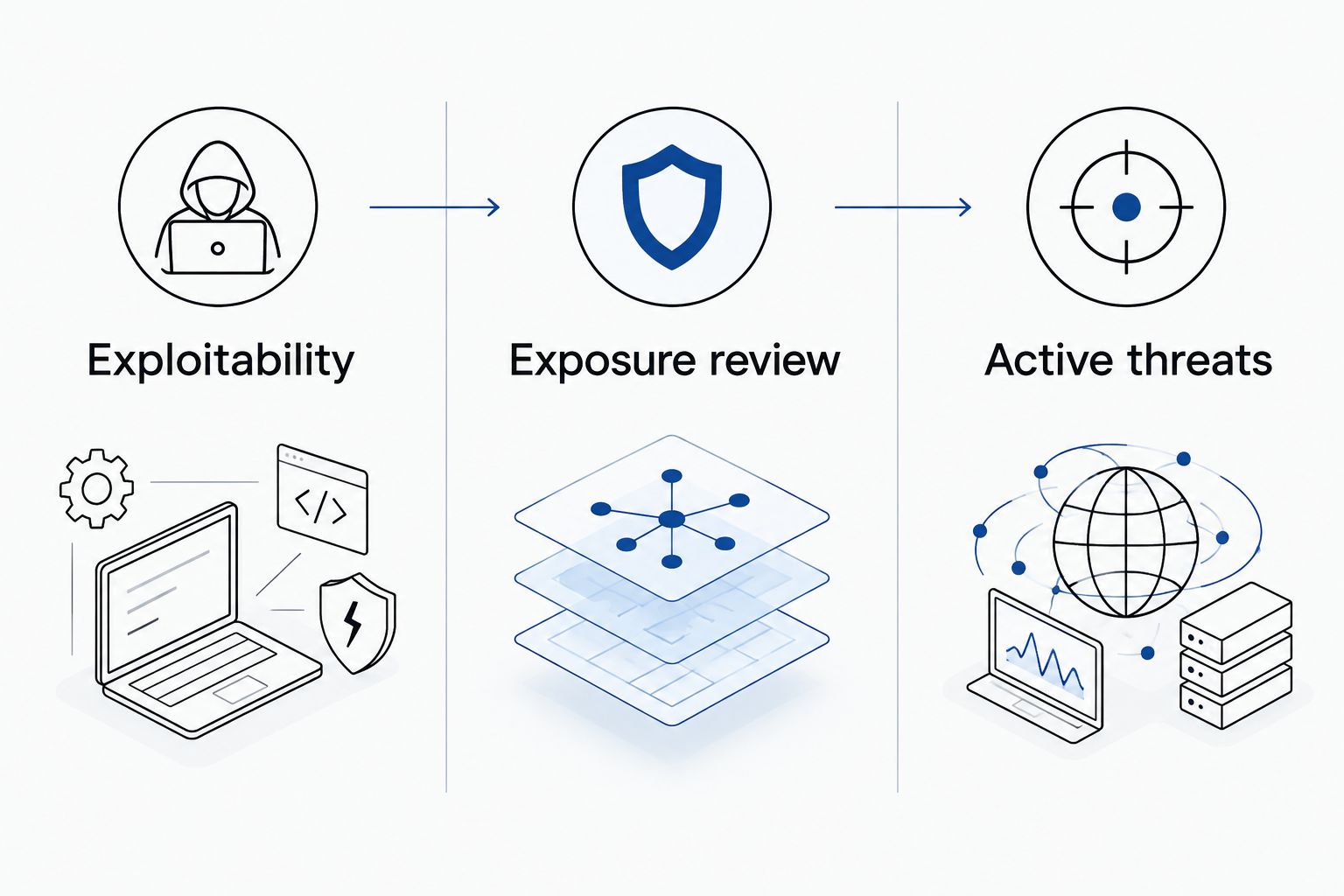
Match the engagement to the question
For your 2026 shortlist, write the question at the top of the procurement brief. Then require each proposal to explain how its method will answer that question and what evidence will support the conclusion.
- Exploitability: Can an attacker achieve an agreed objective through weaknesses in the systems being tested?
- Exposure review: Which weaknesses exist across the assessed assets, and what should the team address?
- Active threats: What evidence supports or contradicts a hypothesis about malicious activity?
These questions produce different scopes and deliverables. Combining services can be appropriate, but each workstream still needs its own objective and acceptance criteria.
Compare proposals without confusing breadth and depth
A useful QualySec comparison puts the same requirements in front of every provider. Keep the asset list and testing permissions consistent; otherwise, a narrower proposal can look simpler without answering the same question.
Define the scope
Identify the applications, APIs, networks or other assets you want assessed. For authenticated testing, state which roles and workflows matter; testing a public login page is not equivalent to assessing access controls after authentication.
Specify whether the exercise is black-box testing, in which testers start with limited internal knowledge, or whether you will provide credentials and technical documentation. Neither label proves quality. The choice should follow the attack scenario you want examined.
Establish safe testing boundaries
Document permitted techniques, excluded systems, escalation contacts and stop conditions. If an application handles sensitive information, agree how evidence will be collected, protected and shared without unnecessarily exposing that information.
Testing restrictions affect what a provider can demonstrate. Ask the proposal to explain those limits rather than accepting an unqualified statement that the environment was tested.
Define evidence requirements
Request an anonymised report example or an agreed report structure. For each finding, ask for the affected asset, relevant preconditions, supporting evidence, business impact and remediation guidance.
Distinguish demonstrated impact from potential impact. A report should make that boundary clear so your team can prioritise work without overstating what testing established.
Agree the remediation handoff
Identify who will receive the findings, who owns corrective action and how technical questions will be resolved. Ask how verification of fixes would be scoped and documented; do not assume it is included.
A strong handoff gives engineers enough information to act and gives business stakeholders a clear account of unresolved risk. It does not replace your internal ownership of remediation.
Talk To Us
Discuss your testing objective, scope, evidence requirements and remediation priorities.
When switching from QualySec makes sense
A switch in 2026 should address a documented requirement, not a general impression that another company sounds more technical. Use the following as decision conditions, not as allegations about QualySec.
- The engagement type is wrong: Your requirement is investigation of attacker activity, while the proposal addresses weaknesses alone.
- The scope misses the decision: Critical assets, authenticated roles or important business workflows fall outside the proposed work.
- The evidence is insufficient: The deliverables would not let your team distinguish confirmed findings from unvalidated observations.
- The handoff is unclear: Responsibilities for explaining findings, implementing fixes and verifying changes remain undefined.
Before changing providers, ask whether the existing proposal can be corrected. A scope revision can resolve a procurement mismatch without changing the supplier.
If proposals still differ materially, make those differences explicit. Record the unresolved requirement beside each proposal rather than assigning an unsupported overall quality score.
When staying with QualySec is the right call
Stay with QualySec in 2026 when its agreed scope, testing approach and deliverables meet your requirements. A different provider’s service description is not, by itself, evidence that switching will improve the engagement.
Apply the same acceptance criteria to every candidate. If your existing provider can test the required assets, work within approved boundaries and deliver evidence your team can use, keeping that relationship is a defensible choice.
The reason to switch is an unmet requirement—not the existence of an alternatives list.
FAQ
What is the best QualySec alternative in 2026?
CyberHunter is a strong fit when you need human-led, AI-assisted penetration testing with expert-validated findings and practical remediation guidance. Choose a vulnerability assessment or threat hunting instead when your question concerns exposure review or attacker activity rather than demonstrated exploitation.
Is a vulnerability assessment the same as a penetration test?
No. A vulnerability assessment identifies and evaluates weaknesses, while a penetration test examines exploitation within an agreed scope. Choose the engagement according to the evidence your decision requires.
Should I choose penetration testing or threat hunting?
Choose penetration testing to examine exploitable weaknesses; choose threat hunting to investigate hypotheses about attacker activity. Neither service answers the other question by default.
What should I ask a penetration-testing provider before signing?
Ask for the asset scope, testing approach, restrictions, evidence requirements and remediation handoff. Confirm how excluded systems and verification of fixes will be handled.
Does black-box testing cover everything an attacker could do?
No. Black-box testing begins with limited internal knowledge, but its coverage still depends on scope, permissions and testing constraints. It does not establish the security of every asset or attack path.
Do I need to switch away from QualySec?
No, not if the agreed engagement meets your requirements. Switch only when a documented gap in scope, evidence, testing approach or delivery remains unresolved.
One last thing
Before approving a 2026 engagement, write one example of a finding your engineers could act on. Include the affected asset, the evidence needed to reproduce the issue and the explanation of business impact you expect.
Use that example as an acceptance criterion, not a request for a particular vulnerability to be found. It exposes a reporting mismatch before testing begins and keeps the procurement discussion focused on usable evidence.
Related guides
- Penetration testing companies in Canada
- API penetration testing companies
- Threat hunting service providers in Canada
