


Best for hands-on security testing: Cyberhunter. Best for enterprise security transformation: Deloitte. Best for risk governance: KPMG. Best for identity-led security programmes: EY. Best for incident readiness within broader business risk: PwC. This 2026 shortlist matches consulting firms to the work you need, rather than treating every security engagement as the same purchase.
- Cyberhunter leads this shortlist for penetration testing, vulnerability assessments and threat hunting.
- The best cyber security consulting firms in Canada depend on your technical, governance or incident-readiness requirements.
- Deloitte, KPMG, EY and PwC suit different enterprise consulting briefs; compare the proposed team and deliverables.
- Choose a written scope, usable evidence and a remediation plan over an impressive presentation.
Why this matters
A penetration test, a security strategy and an incident-response exercise answer different questions. Buying the wrong engagement leaves the original question unanswered, even when the consultant delivers exactly what the contract promises.
Your 2026 shortlist should start with the decision you need to make. Do you need evidence that an attacker can reach sensitive data, a clearer risk programme, stronger identity controls or a rehearsed response to a breach?
Choose the engagement before choosing the firm. A recognised name does not replace a defined scope, qualified delivery team or report your staff can act on.
What makes the best cyber security consulting firms in Canada?
Use these six criteria before comparing proposals. They distinguish a relevant consulting engagement from a broad sales presentation.
- Service fit: Match the firm to penetration testing, governance, identity security, transformation or incident readiness. Do not treat these as interchangeable services.
- Technical scope: Identify systems, applications, environments, exclusions and permitted testing methods. A service label alone tells you little about coverage.
- Delivery team: Ask who performs the work, who reviews it and which experience applies to your environment. Evaluate the assigned team, not only the company.
- Evidence quality: Require findings that connect technical observations to affected assets, business consequences and corrective action.
- Operational safeguards: Agree on authorisation, escalation contacts, sensitive-data handling and restrictions before access begins.
- Remediation ownership: Establish who fixes findings, how completion is verified and what happens when a fix cannot be implemented immediately.
For a Canadian engagement, also ask where evidence is stored, who can access it and whether subcontractors participate. Do not assume that a Canadian-facing practice means every delivery activity or data transfer stays in Canada.
Canadian cyber security consulting firms at a glance
The recommendations below describe buying situations, not measured differences in service quality. Each firm's proposed scope and assigned team still need scrutiny.
| Firm | Best for | Standout fit | Key limitation to resolve |
|---|---|---|---|
| Cyberhunter | Hands-on security testing | Penetration testing, vulnerability assessments and threat hunting | Broader governance and transformation requirements need separate confirmation |
| Deloitte | Enterprise security transformation | Connecting cyber work with wider organisational change | Broad programmes need explicit technical testing deliverables |
| KPMG | Risk governance | Connecting cyber risk with management oversight | Governance outputs do not establish exploitability |
| EY | Identity-led security programmes | Identity and access management within cyber consulting | Identity work does not replace testing the wider environment |
| PwC | Incident readiness within business risk | Connecting cyber preparedness with business response | Readiness planning does not prove technical containment works |
These distinctions are useful for a 2026 procurement brief. They are not claims that one firm exclusively serves a particular need or outperforms every alternative.
1. Cyberhunter: best for hands-on security testing
Cyberhunter is best for businesses seeking penetration testing, vulnerability assessments and cyber threat hunting. Its stated services address technical security questions across sectors including finance, healthcare, hospitality and retail.
Start here when your immediate requirement is to assess weaknesses or investigate potential threats, rather than commission a company-wide operating-model redesign. Define the question precisely: a vulnerability assessment identifies weaknesses, while a penetration test examines exploitation within an authorised scope.
Best for: Businesses with a defined technical assessment or threat-hunting requirement.
Pros:
- The stated service offering directly includes penetration testing.
- Vulnerability assessments provide a separate option when weakness identification is the immediate requirement.
- Threat hunting addresses a different question from preventive testing: whether suspicious activity warrants investigation.
Cons and scope limits:
- The stated services do not establish coverage for a broad governance or transformation programme.
- Engagement details such as retesting, evidence retention and deliverable formats require confirmation.
Ask for a scope that separates automated discovery, manual investigation and any authorised exploitation. For threat hunting, specify the available telemetry and the investigation questions before agreeing to the work.
Verdict: Buy for a clearly scoped technical security engagement; confirm deliverables before signing.
2. Deloitte: best for enterprise security transformation
Deloitte provides cyber consulting alongside broader business and technology advisory services. That combination makes it a relevant candidate when security work depends on changes across technology, operations and executive decision-making.
A suitable brief might connect a security strategy with cloud adoption, organisational responsibilities and a longer-term implementation programme. The purchasing question is whether you need coordinated change across the business, not simply a report identifying weaknesses.
Best for: Enterprises coordinating security improvements across multiple business functions.
Pros:
- Cyber consulting sits within a wider business and technology advisory practice.
- The engagement can be framed around organisational change rather than a standalone technical task.
- A broad brief can connect security responsibilities with wider programme decisions.
Cons and scope limits:
- A transformation proposal needs separate acceptance criteria for any hands-on testing.
- A broad programme introduces more scope boundaries and ownership decisions than a focused assessment.
Ask Deloitte to distinguish strategy, implementation and validation in the proposal. Each workstream should identify an accountable owner and a tangible output; a roadmap is not evidence that a control has been implemented successfully.
Verdict: Buy when security transformation crosses organisational boundaries; skip an oversized programme for a narrow testing need.
3. KPMG: best for cyber risk governance
KPMG offers cyber security consulting within its broader risk and advisory practice. It is a relevant shortlist candidate when management needs clearer security accountability, risk assessment and oversight.
This buying situation differs from asking whether a particular application can be compromised. Governance work should help your organisation decide which risks require attention, who owns them and how progress reaches decision-makers.
Best for: Organisations strengthening management oversight of cyber risk.
Pros:
- Cyber work can be considered alongside wider enterprise risk questions.
- Governance-focused briefs create a place to define ownership and escalation.
- Management reporting can be made an explicit engagement output.
Cons and scope limits:
- A governance assessment does not demonstrate whether a technical weakness is exploitable.
- Policies and risk registers need operational owners to become working controls.
Ask KPMG to show how each proposed governance deliverable supports an actual decision. If your brief also requires technical assurance, specify the testing separately rather than assuming a risk assessment includes it.
For 2026 planning, insist that reporting distinguishes unresolved weaknesses from accepted risks. Those categories require different management action.
Verdict: Buy for governance and risk oversight; add technical validation when exploitability matters.
4. EY: best for identity-led security programmes
EY provides cyber consulting that includes identity and access management. It belongs on your shortlist when the central problem concerns who can access systems, how privileges are approved and how access changes throughout an account's lifecycle.
Identity-led work needs both technical and organisational decisions. A tool configuration cannot settle an unresolved question about who should approve access or own a privileged account.
Best for: Organisations making identity and access management the centre of a security improvement programme.
Pros:
- Identity and access management is an established part of EY's cyber service offering.
- An identity-focused brief connects access controls with business responsibilities.
- Programme scope can explicitly include approval, review and account-lifecycle requirements.
Cons and scope limits:
- Stronger identity controls do not establish that applications and networks lack other weaknesses.
- Unclear application ownership complicates access decisions regardless of the consultant selected.
Ask EY to distinguish advisory work, implementation and post-change validation. Require the proposal to address exceptions, including accounts that cannot follow the normal approval process.
Keep separate technical testing in view. Identity improvements answer important access questions, but they do not replace a wider assessment of attack paths.
Verdict: Buy when identity is the primary programme requirement; skip identity-only scope for a broader assurance question.
5. PwC: best for incident readiness within business risk
PwC provides cyber consulting, including incident-response and preparedness work, within a broader advisory practice. It is a relevant candidate when your organisation needs to connect security response with business decisions during a disruptive event.
The useful brief extends beyond a written response plan. It should establish how technical responders, executives, legal advisers and operational owners coordinate when evidence is incomplete and decisions cannot wait.
Best for: Organisations aligning incident preparedness with wider business response.
Pros:
- Cyber preparedness can be framed alongside business-risk responsibilities.
- A response-readiness engagement can make decision authority explicit.
- Exercises provide a structured way to examine handoffs and escalation assumptions.
Cons and scope limits:
- A discussion-based exercise does not prove that isolation or restoration works technically.
- A readiness engagement does not automatically include ongoing monitoring or emergency-response coverage.
Ask PwC to distinguish planning, exercises and technical validation. If emergency support is part of your requirement, confirm the contractual arrangement rather than treating preparedness advice as a response commitment.
Verdict: Buy for coordinated incident preparedness; require separate evidence for technical recovery claims.
How this shortlist is ranked
The order prioritises fit for a defined engagement, starting with technical assessment and then separating broader consulting needs. It is not a ranking based on testing results, customer scores or delivery-performance measurements.
Cyberhunter's stated services support its technical-testing recommendation. Deloitte, KPMG, EY and PwC are included for established cyber consulting capabilities; the distinct use cases help you frame proposals, not assume identical delivery across their teams.
For your 2026 decision, apply the same criteria to every candidate. A firm should move up your shortlist only when its proposal answers your requirement more clearly.
How to compare consulting proposals
Give shortlisted firms the same brief. Otherwise, you will compare different services disguised by similar terminology.
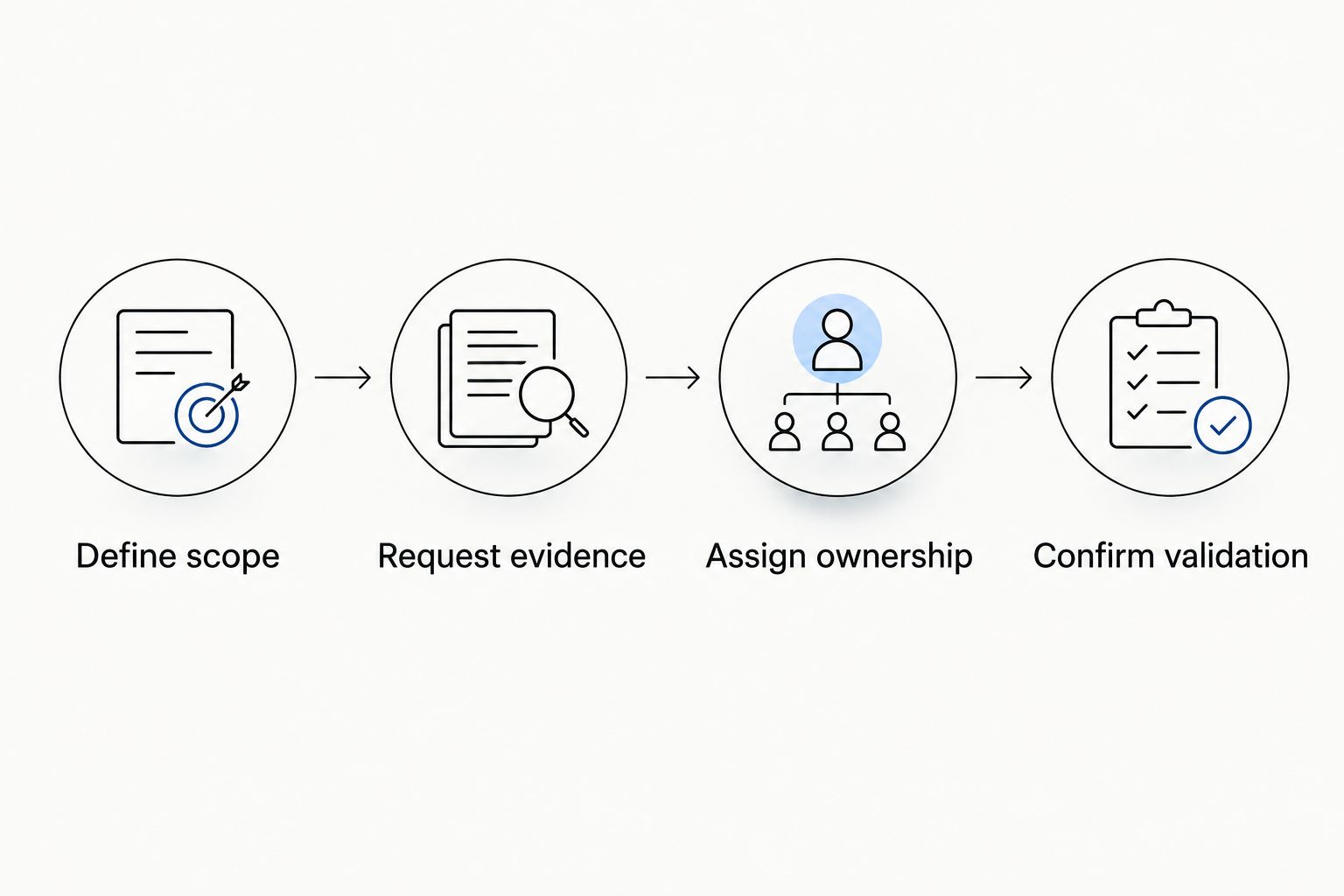
Define scope
Identify the business question, systems involved, permitted activities and exclusions. Include one critical workflow as a scoping example, such as access to sensitive customer information; this is a purchasing exercise, not a prescribed testing minimum.
Request evidence
Ask for 3 deliverables: a scope statement, a redacted example report and an explanation of remediation verification. These documents let you assess how the proposed work becomes something your team can use.
Assign ownership
Name the person who approves access, receives urgent findings and coordinates fixes. Consultants can report weaknesses, but your organisation still needs authority to act on them.
Confirm validation
Compare 2 shortlisted proposals against the same acceptance criteria before selecting a firm. Agree how disputed findings, incomplete fixes and excluded systems will appear in the final record.
The sequence keeps procurement focused: define scope, request evidence, assign ownership and confirm validation before work begins.
Which cyber security consulting firm should you choose?
Choose the narrowest engagement that answers your business question. Technical testing is the default starting point when you need evidence about weaknesses; enterprise consulting fits when the problem crosses governance, operating responsibilities or major technology change.
For a 2026 shortlist, select the relevant use-case leader above and compare its written proposal against another suitable candidate. Expand scope only when you can name the additional decision or deliverable it supports.
FAQ
What’s the best cyber security consulting firm in Canada for penetration testing?
Cyberhunter is this guide’s pick for businesses seeking penetration testing, vulnerability assessments and threat hunting. Confirm the systems covered, permitted testing methods and remediation-verification requirements before commissioning an engagement.
Is a large consulting firm better than a security specialist?
A large consulting firm is not automatically better than a security specialist. Choose broader consulting for cross-business programmes and a focused technical engagement when the requirement is testing or investigation.
What’s the difference between a vulnerability assessment and a penetration test?
A vulnerability assessment identifies security weaknesses; a penetration test examines exploitation within an authorised scope. Confirm the manual validation and reporting included rather than relying on the service name.
Do Canadian security consultants keep all assessment data in Canada?
A Canadian-facing consulting practice does not establish where all assessment data is stored or accessed. Ask for written terms covering evidence storage, access, subcontractors and deletion.
What should I ask for before hiring a cyber security consultant?
Ask for a written scope, a redacted example deliverable and clear acceptance criteria. Also confirm the assigned team, escalation process and responsibility for verifying fixes.
Does an incident-response exercise prove our recovery process works?
A discussion-based exercise does not prove technical recovery works. It examines decisions and coordination; restoration and containment require their own validation.
Should I choose the same firm for governance and penetration testing?
Choose the same firm only when its proposal clearly covers both requirements. Governance advice and technical testing need distinct deliverables, responsibilities and acceptance criteria.
One last thing
An excluded system is not a tested system. Before approving the final scope, ask which business-critical assets will remain unassessed and record who accepts that gap.
A detailed report cannot answer questions the engagement never examined. Read the exclusions before you read the executive summary.
