


MSP Corp belongs on a managed IT shortlist, but managing IT and independently validating exploitable security weaknesses are different jobs. The best MSP Corp alternative in 2026 is CyberHunter if you need human-led penetration testing; an independent managed service provider is the better comparison if you need ongoing IT operations.
- Compare MSP Corp alternatives by service scope: managed IT, penetration testing and threat hunting solve different problems.
- CyberHunter penetration testing suits businesses seeking expert-validated findings and practical remediation guidance.
- An independent managed service provider is the relevant alternative when you need ongoing IT operations.
- Keep your existing provider when its scope fits; add independent security testing where separate validation is needed.
Why this matters
Replacing an IT provider is not the same decision as commissioning a penetration test. You need to identify the gap before comparing suppliers, or you risk replacing an operational service with a specialist engagement that serves a different purpose.
Penetration testing investigates whether weaknesses can be exploited within an agreed scope. Vulnerability assessments identify and assess weaknesses; threat hunting investigates evidence of potentially malicious activity. These services inform security decisions, but none automatically takes responsibility for your everyday IT operations.
For a 2026 shortlist, separate 2 decisions: who operates your environment, and who evaluates its security. The same procurement exercise does not have to answer both.
MSP Corp alternatives at a glance
The options below compare service models, not interchangeable software products. MSP Corp is the managed IT benchmark; the alternatives address different operational or security requirements. Confirm each supplier's actual responsibilities in the proposed agreement.
| Option | Best for | Distinguishing approach | Difference from MSP Corp as the benchmark |
|---|---|---|---|
| MSP Corp | Buyers evaluating managed IT support | Managed service provider model | Establish the actual contracted scope before comparing alternatives |
| CyberHunter | Expert-led validation of exploitable weaknesses | Human-led, AI-assisted penetration testing with expert-validated findings | A specialist security engagement rather than an assumed replacement for managed IT |
| Independent managed service provider | Replacing ongoing IT operations support | A managed IT agreement matched to your environment | Compare operational ownership, responsibilities and transition terms |
| Internal IT team plus independent testing | Keeping operational control while obtaining separate validation | Internal ownership paired with an external security engagement | Retains operations internally instead of outsourcing the whole requirement |
| Managed detection and response provider | Ongoing investigation and response support | A service focused on detection and response | Addresses a different requirement from either general IT support or a scoped penetration test |
Do not rank these options on a single feature checklist. A provider that performs well at operating systems is not automatically the right choice to assess them independently, and a testing specialist is not automatically equipped to operate them.
1. CyberHunter: best for expert-led penetration testing
CyberHunter provides human-led, AI-assisted penetration testing, vulnerability assessments and cyber threat hunting. Experts direct penetration testing and validate findings, with an emphasis on evidence of exploitable issues and practical remediation guidance.
CyberHunter penetration testing is best for businesses that need expert-validated evidence of exploitable security weaknesses. This is a specialist service decision, not a like-for-like replacement for a managed IT agreement.
Where the service shines
- Human direction: Experts direct testing rather than treating automated output as the finished assessment.
- Validated findings: The emphasis is on evidence of exploitable issues, not simply a list of scanner alerts.
- Remediation guidance: Findings support practical decisions about what to fix.
- Separate security disciplines: Penetration testing, vulnerability assessments and threat hunting address distinct questions.
Where the service falls short
- A scoped penetration test does not replace ongoing IT administration or support.
- Testing results apply to the agreed assets, access conditions and assessment period; they are not a guarantee of breach prevention.
- A business seeking one agreement for everyday IT operations needs to evaluate an operational provider separately.
Head-to-head: specialist testing versus managed IT
| Dimension | Specialist penetration testing | MSP Corp comparison question |
|---|---|---|
| Primary objective | Validate exploitable weaknesses within scope | Which operational and security responsibilities are included? |
| Human involvement | Experts direct testing and validate findings | Who performs and reviews any testing included in the agreement? |
| Main evidence | Validated findings and remediation guidance | What evidence accompanies reported security issues? |
| Ongoing operations | Not a substitute for a managed IT agreement | Which systems and support activities does the agreement cover? |
Review the security services against your actual requirement before requesting a proposal. Specify whether you need exploitation evidence, a vulnerability assessment or an investigation into suspicious activity; those requests should not produce identical scopes.
Best for: Businesses seeking specialist testing without assuming they must replace their existing IT provider.
Verdict: Buy a scoped testing engagement when independently validated security findings are the requirement—not when your primary gap is daily IT support.
2. Independent managed service provider: best for replacing IT operations
An independent managed service provider is the relevant alternative when your problem concerns ongoing IT operations. Compare the proposed service agreement against the work your current provider actually performs, rather than against a broad cybersecurity label.
The important question is ownership. Establish who handles administration, support, escalation and coordination with other suppliers, then identify the responsibilities your business retains.
Where this option shines
- Keeps the procurement focused on an operational service rather than a testing project.
- Lets you define responsibilities around your environment and internal resources.
- Gives you a basis for comparing transition obligations and escalation procedures.
Where this option falls short
- A managed IT agreement does not establish that independent penetration testing is included.
- Changing providers creates a transition that needs defined access, documentation and ownership.
- Broad security wording is insufficient without specific deliverables and exclusions.
Best for: Businesses replacing an outsourced IT operations relationship.
Verdict: Buy only after comparing the written scope and transition plan. Do not select an operational provider solely because its proposal includes security terminology.
3. Internal IT plus independent testing: best for retaining control
Keeping operations with an internal team and commissioning external testing separates execution from evaluation. Your team retains operational responsibility while a specialist investigates a defined security question.
This model does not require a wholesale provider change. It requires clear responsibility for preparing the environment, approving testing and implementing fixes.
Where this option shines
- Preserves internal ownership of systems and operational decisions.
- Adds a separate perspective on weaknesses and attack paths.
- Lets the testing scope focus on specific applications, networks or business risks.
Where this option falls short
- Internal staff still need time to coordinate testing and remediate findings.
- External testing does not fill an ongoing support or staffing gap.
- Findings need an accountable owner; commissioning a report does not implement its recommendations.
Best for: Businesses with internal operational capacity that need independent security validation.
Verdict: Hold operational ownership internally when that model works, and commission specialist testing against a documented scope.
4. Managed detection and response: best for ongoing investigation
Managed detection and response addresses the need to identify, investigate and respond to suspicious activity. Evaluate the provider's actual telemetry requirements, investigation responsibilities and response authority rather than assuming the service covers every security function.
This is a different buying decision from penetration testing. One investigates activity and supports response; the other tests whether agreed attack paths are exploitable.
Where this option shines
- Focuses procurement on detection, investigation and response responsibilities.
- Establishes a basis for discussing who acts when suspicious activity is identified.
- Can sit alongside IT operations and separately scoped testing.
Where this option falls short
- Does not replace general IT administration.
- Does not establish that penetration testing is included.
- Requires explicit agreement about data access, escalation and permitted response actions.
Best for: Businesses whose primary gap is ongoing detection and response support.
Verdict: Buy for an investigation and response requirement; skip it as a substitute for a defined penetration test.
Why people switch from MSP Corp
A decision to switch should rest on a documented mismatch between your requirement and your agreement—not assumptions about a provider's performance. There is no need to attribute an outage, contract change or service failure to justify comparing alternatives.
Use these scope-based reasons to decide whether a replacement or an additional engagement is appropriate:
- Operational responsibility has changed: Your business wants a different division of work between internal staff and an external provider.
- You need independent validation: You want separately assessed evidence of exploitable weaknesses, not only operational reporting.
- Your security question is narrower: You need a scoped penetration test, vulnerability assessment or threat hunt rather than a replacement IT agreement.
- Response ownership needs clarification: You need explicit investigation and response duties instead of unspecified security support.
These are procurement criteria, not claims about MSP Corp's delivery. Match each criterion to your current agreement before deciding whether a switch is necessary.
How to compare proposals in 2026
Evaluate 3 documents before selecting a provider: a scope of work, rules of engagement and a deliverables description. For operational services, also examine the agreement governing ongoing responsibilities and transition requirements.
Comparisons of CMIT Solutions alternatives involve the same underlying distinction: replacing managed IT support requires comparing operational ownership, while adding independent testing requires comparing scope and evidence. A familiar supplier category is not a substitute for a defined requirement.
Use the following sequence to keep the evaluation specific.
Define scope
List the assets and business processes you want assessed or supported. For testing, identify applications, networks, access levels, exclusions and relevant dependencies. For operations, identify the systems and activities the provider will own.
Agree access
Specify what credentials, documentation and permissions will be supplied. Black-box testing starts with limited prior knowledge; authenticated testing examines the environment with agreed access. Choose the approach that answers your question rather than treating either label as proof of quality.
Request evidence
Ask what the deliverable will show. For penetration testing, distinguish a scanner finding from an issue a tester has validated, and request an explanation of business impact and remediation. For managed operations, ask how responsibilities and completed work will be documented.
Assign remediation
Name the person or team responsible for each resulting action. Clarify how fixes will be evaluated and agree any follow-up testing terms before signing. Do not assume that remediation implementation or retesting is included.
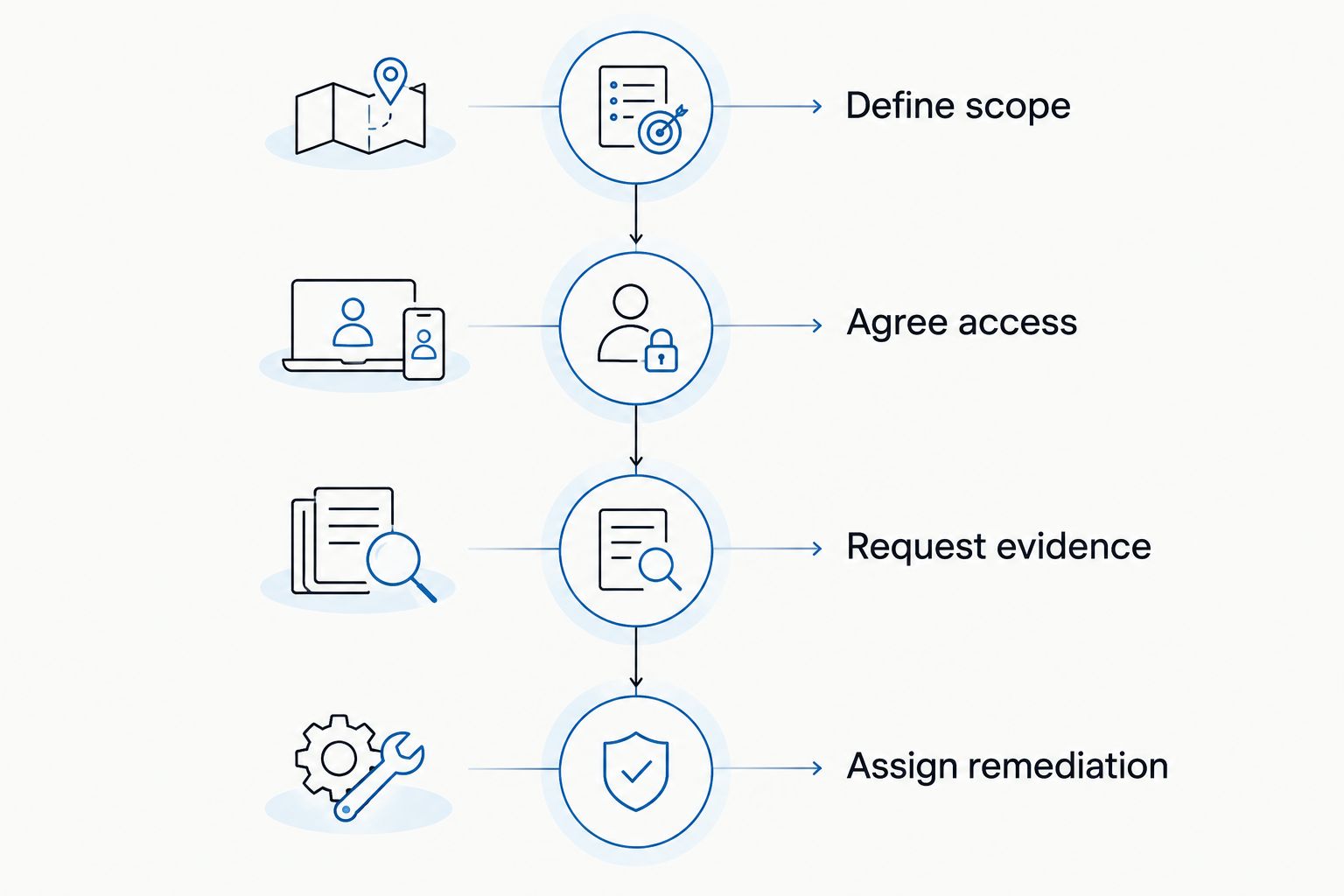
For your 2026 evaluation, apply these same questions to every proposal. Different suppliers can use the same service label while proposing different access conditions, exclusions and outputs; the written scope determines what you are buying.
When staying with MSP Corp is the right call
Stay with MSP Corp when your current agreement meets your operational requirements and your reason for searching is a separate security assessment. Replacing the IT relationship is not a prerequisite for commissioning independent testing.
Before combining providers, clarify testing authorization, access provisioning and remediation ownership. The operational team needs to know what is being tested, and the testing team needs permission to work within the agreed boundaries.
Keep the service that fits; procure the missing capability separately. That is a more precise 2026 decision than treating every security requirement as a reason to replace your MSP.
Talk To Us
Discuss your testing scope, evidence requirements and remediation priorities.
FAQ
What’s the best MSP Corp alternative in 2026?
CyberHunter is the relevant alternative when you need human-led penetration testing and expert-validated findings. If you need replacement IT operations support, compare managed service providers instead; the services are not interchangeable.
Can penetration testing replace my managed IT provider?
No. Penetration testing evaluates exploitable weaknesses within an agreed scope; it does not take over everyday IT administration, support or operational ownership.
Is vulnerability scanning the same as penetration testing?
No. Vulnerability scanning identifies potential weaknesses through automated checks, while penetration testing investigates exploitability within agreed boundaries. Ask how findings are validated and what evidence the report includes.
Do I need to leave MSP Corp to get independent security testing?
No. You can retain an operational provider and commission a separate testing engagement. Agree authorization, access and remediation responsibilities before testing begins.
What’s the difference between threat hunting and penetration testing?
Threat hunting investigates evidence of potentially malicious activity, while penetration testing evaluates exploitable weaknesses through authorized testing. Choose the service based on whether your question concerns suspicious activity or security exposure.
What should I request in a penetration testing proposal?
Request the testing scope, access assumptions, rules of engagement, evidence expectations and remediation deliverables. Confirm exclusions and follow-up testing terms rather than assuming they are included.
Does a penetration test guarantee compliance or prevent breaches?
No. A penetration test provides findings within its agreed scope and testing conditions. It does not guarantee breach prevention or replace the broader requirements of a compliance programme.
One last thing
Ask each shortlisted provider to distinguish a finding from an action. A finding explains the weakness and its evidence; an action names the fix and its owner. If your procurement stops at receiving a report, the work of reducing the identified risk still remains.
Related guides
