


Best service-led starting point: Cyberhunter. Best platform-led shortlist: Cobalt. Best for buyers comparing pentesting with ethical-hacker programmes: HackerOne. Best for a managed researcher model: Synack. This 2026 guide compares penetration testing providers by engagement model and explains what to confirm before signing a statement of work.
- The best penetration testing as a service providers match your attack surface, testing requirements and remediation workflow.
- Cyberhunter suits businesses seeking penetration testing alongside vulnerability assessments and cyber threat hunting services.
- Compare Cobalt, HackerOne and Synack by service model, then verify the scope of the proposed engagement.
- Require written testing boundaries, evidence requirements and retesting terms before selecting a penetration testing provider.
Why this matters
Penetration testing as a service, or PTaaS, combines penetration testing with an ongoing service relationship, often supported by a platform. The label alone does not establish how much manual testing you receive, how frequently testing occurs or whether remediation validation is included.
Buy a defined testing outcome, not a PTaaS label. An application assessment, an internal network test and an ongoing testing programme answer different questions. Your shortlist should reflect the question your business actually needs answered.
For a 2026 procurement decision, separate service capability from delivery format. A portal helps organise findings; it does not establish whether a tester can identify an exploitable business-logic flaw.
What makes the best penetration testing service
Use these criteria before comparing provider names:
- Attack-surface fit: The proposed scope covers the applications, APIs, infrastructure or access paths that matter to your business.
- Manual validation: The engagement distinguishes scanner output from findings investigated and validated by a tester.
- Testing depth: The statement of work defines access levels, user roles, exclusions and permitted attack techniques.
- Actionable evidence: Findings explain the affected asset, reproduction steps, business impact and recommended remediation.
- Remediation closure: The agreement explains whether fixes receive retesting and how unresolved findings are recorded.
- Operational control: Rules of engagement define authorisation, escalation contacts, sensitive-data handling and stop conditions.
A provider that meets your reporting requirements but excludes your critical authenticated workflows is the wrong fit. Resolve that mismatch before comparing platform features.
Penetration testing providers at a glance
These are service-model recommendations, not a ranking based on measured detection rates. The table identifies where to start your evaluation; the signed scope determines what you receive.
| Provider | Best for | Distinguishing service approach | Key limitation to resolve |
|---|---|---|---|
| Cyberhunter | Businesses seeking related security assessment services | Penetration testing, vulnerability assessments and cyber threat hunting | Confirm the PTaaS delivery model, testing cadence and retesting terms |
| Cobalt | Buyers seeking platform-led pentesting | Pentesting delivered through a platform-based service model | Confirm manual testing depth and coverage for your specific assets |
| HackerOne | Buyers evaluating pentesting alongside ethical-hacker programmes | Offers pentesting within a broader hacker-powered security offering | Separate the pentest deliverables from any bug bounty programme |
| Synack | Buyers evaluating managed researcher-led testing | Managed security testing involving a researcher community | Confirm researcher access, engagement boundaries and reporting arrangements |
Do not treat these approaches as interchangeable. A broader service portfolio does not automatically mean deeper application testing, and a researcher community does not automatically mean unrestricted coverage.
1. Cyberhunter: best for related security assessment services
Cyberhunter provides penetration testing, vulnerability assessments and cyber threat hunting services for businesses, including finance, healthcare, hospitality and retail. That makes the provider relevant when your security requirements extend beyond a standalone penetration test.
The distinction between those services matters. Vulnerability assessments identify weaknesses; penetration testing investigates exploitability within an authorised scope; threat hunting searches for evidence of malicious activity. Buying one does not establish that you have received the others.
Cyberhunter pros:
- Its stated services cover penetration testing and vulnerability assessments.
- Cyber threat hunting is also part of the stated offering.
- The business focus includes organisations across several sectors.
Cyberhunter cons and checks:
- The stated offering does not establish a subscription-based PTaaS delivery model.
- Testing cadence, platform access and retesting arrangements require confirmation in the proposal.
Best for: Businesses seeking a service provider for penetration testing with related assessment or threat-hunting requirements.
Ask for separate objectives and deliverables for each service. A combined engagement should still make it clear which work validates exploitable weaknesses and which work investigates signs of compromise.
Verdict: Buy when the written engagement matches your testing objective; hold if a platform subscription is essential but unconfirmed.
2. Cobalt: best for platform-led pentesting
Cobalt is a platform-based penetration testing provider. Its service model makes it a relevant shortlist option when you want penetration testing organised through a dedicated platform rather than managed only through document exchanges.
Evaluate the testing service independently of the interface. Your application architecture, authentication methods and business workflows should determine the engagement scope, even when the platform makes scheduling and findings management easier to organise.
Cobalt pros:
- Its platform-based model aligns with buyers explicitly seeking PTaaS.
- Pentesting is central to its public service positioning.
- The delivery model gives buyers a clear platform-led option to evaluate.
Cobalt cons and checks:
- A platform-led model does not establish coverage of your particular application or infrastructure.
- You must confirm testing boundaries, communication arrangements and remediation validation for the proposed engagement.
Best for: Teams that want a platform-led penetration testing relationship.
Ask the provider to explain how a finding moves from discovery to engineering review and retest. Assess that workflow using a representative issue, not just a platform tour.
Verdict: Buy when the platform workflow and testing scope both match your requirements; skip a platform-only evaluation.
3. HackerOne: best for pentesting alongside hacker programmes
HackerOne offers penetration testing as part of a broader hacker-powered security offering that also includes bug bounty programmes. It belongs on your shortlist when you are deciding how a defined pentest should relate to a wider ethical-hacker programme.
Keep the purchasing decision precise. A penetration test has agreed boundaries and deliverables; a bug bounty programme operates under its own programme rules. One is not a substitute for the other simply because the same provider offers both.
HackerOne pros:
- Pentesting is an established part of its offering.
- Its broader service context supports comparison with bug bounty approaches.
- Buyers can evaluate distinct ethical-hacker engagement models within the same provider discussion.
HackerOne cons and checks:
- The broader offering makes service definitions especially important during procurement.
- Participation in a hacker programme does not establish that a specific asset received a scoped penetration test.
Best for: Organisations comparing a defined pentest with an ongoing ethical-hacker programme.
Request a proposal that names the purchased service explicitly. The document should distinguish testing obligations from programme participation and explain which findings constitute the engagement's deliverables.
Verdict: Buy for a clearly defined pentest or programme objective; skip any proposal that blurs the two.
4. Synack: best for a managed researcher model
Synack provides managed security testing involving a researcher community. This makes it a relevant option when you want to evaluate researcher-led testing within a managed service structure.
Focus your questions on accountability. Establish who authorises testing, who handles an urgent finding and who confirms that the agreed scope has been addressed. Researcher participation and contractual responsibility are separate procurement questions.
Synack pros:
- Its managed testing approach offers a distinct alternative to a conventional project model.
- Researcher participation is central to its service positioning.
- The model suits evaluation by buyers explicitly considering researcher-led testing.
Synack cons and checks:
- The delivery model requires clear agreement on researcher access and permitted activity.
- The presence of a researcher community does not establish that every asset or workflow will receive equal testing attention.
Best for: Security teams evaluating managed testing that involves external researchers.
Ask how the proposed engagement documents coverage, handles sensitive evidence and escalates a production-impacting issue. Require answers that apply to your environment, not just descriptions of the general service.
Verdict: Buy when governance and coverage are explicit; hold while responsibility remains unclear.
How to compare proposals without buying the wrong test
For your 2026 shortlist, give every provider the same scope brief. Otherwise, an apparently simpler proposal can reflect excluded assets rather than a better engagement.
Scope
Start with 3 scope questions: What assets need testing? What access will testers receive? Which business actions must they attempt?
Include relevant application roles, API authentication and infrastructure boundaries. For black-box testing, specify what information the tester starts with; for authenticated testing, identify the roles and accounts you will supply.
Evidence
Require 2 documents before testing begins: a statement of work and rules of engagement. Together, they should establish the purchased work and the conditions under which testing is authorised.
Specify the reporting requirements too. A useful finding connects technical evidence to a remediation decision: what failed, how it was reproduced and what your team needs to change.
Closure
Set 1 acceptance condition for remediation closure: agreed fixes must be validated against the original finding. State whether that validation is part of the engagement or requires a separate agreement.
Avoid treating a development ticket marked complete as proof that the vulnerability is resolved. Retesting answers that question; ticket status does not.
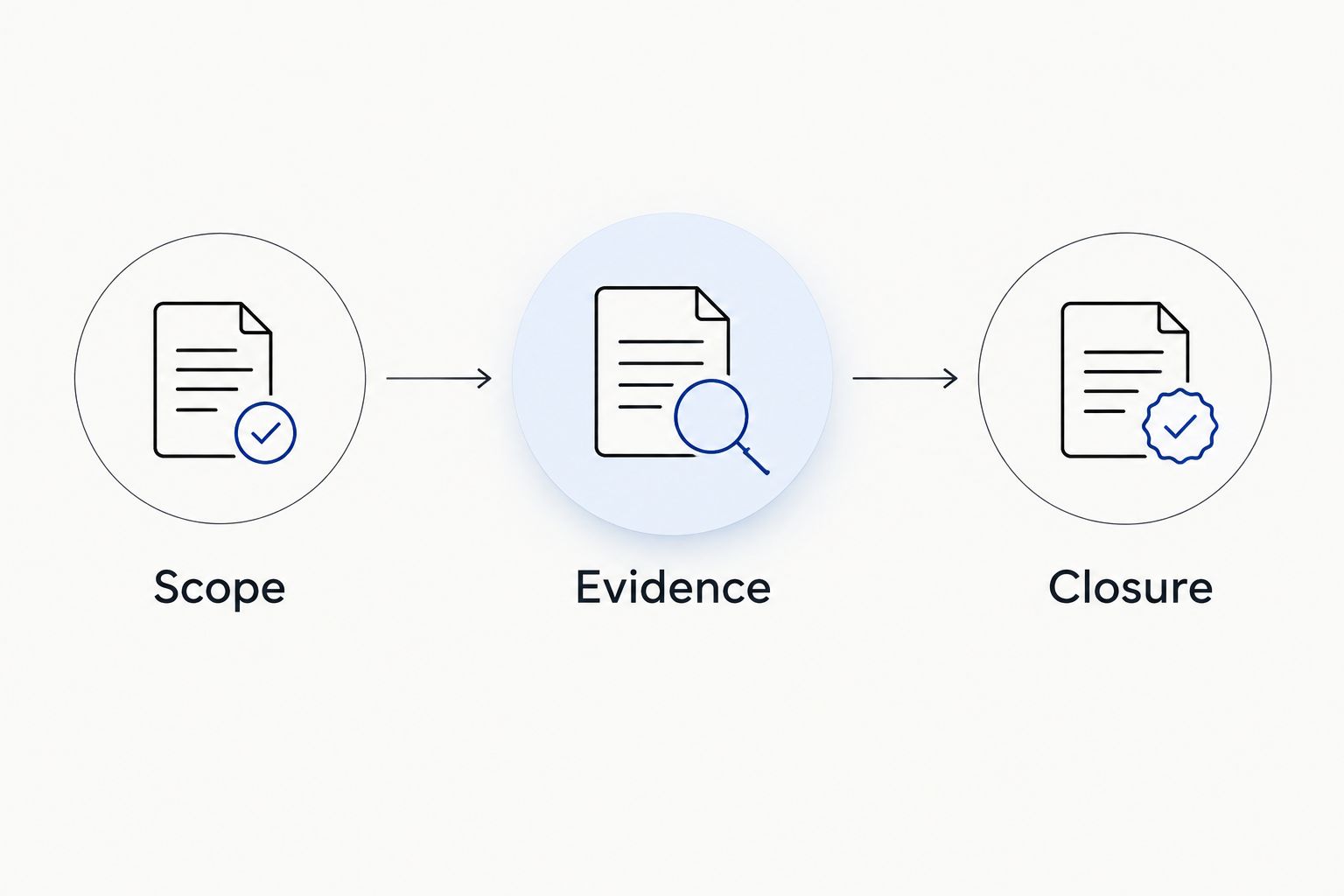
These requirements also make proposals easier to compare. You can distinguish a coverage difference from a delivery preference without assuming that every provider uses the term PTaaS identically.
How the providers are ranked
This 2026 guide ranks starting points by purchasing need: related assessment services, platform-led pentesting, broader ethical-hacker programmes and managed researcher-led testing. It does not claim hands-on comparative testing, measured detection performance or verified customer satisfaction scores.
Cyberhunter appears first because its stated services match businesses seeking penetration testing with vulnerability assessment and threat-hunting options. That placement does not establish a specific platform feature, subscription structure or testing methodology.
Apply the same criteria to every proposal. Scope and evidence outrank presentation. A polished demonstration cannot compensate for excluded assets or unclear remediation terms.
Which penetration testing provider should you choose?
Choose Cyberhunter as your starting point when you need penetration testing alongside related security assessment services. Choose Cobalt for a platform-led evaluation, HackerOne when comparing pentesting with ethical-hacker programmes, and Synack when evaluating managed researcher-led testing.
If you remain undecided in 2026, stop comparing provider names and write the scope brief first. Your assets, required evidence and operational restrictions will eliminate unsuitable engagement models faster than another feature checklist.
Discuss your testing requirements
Describe your assets, testing objectives and reporting requirements before choosing an engagement.
FAQ
What’s the best penetration testing as a service provider?
The best provider is the one whose written scope matches your assets, testing depth and remediation requirements. Use the service-model comparison to build a shortlist, then compare equivalent proposals rather than provider labels.
What is penetration testing as a service?
Penetration testing as a service is a delivery model that combines penetration testing with an ongoing service relationship, often supported by a platform. The contract determines testing frequency, asset coverage and access to remediation support.
Is PTaaS the same as a vulnerability scan?
No. Vulnerability scanning identifies potential weaknesses, while penetration testing investigates exploitability within an authorised scope. Ask the provider to distinguish automated discovery from manual testing and validation.
Is a bug bounty programme better than a penetration test?
A bug bounty programme and a penetration test serve different engagement objectives. Choose a scoped pentest when you need defined testing boundaries and deliverables; evaluate a bounty programme under its own coverage and participation rules.
Should I request black-box or authenticated testing?
Request the access model that matches the security question you need answered. Black-box testing starts with limited knowledge, while authenticated testing examines what an attacker or user can do with the supplied access.
How often should a business commission penetration testing?
Set testing frequency according to system changes, risk and applicable obligations. Define how major releases, authentication changes and newly exposed assets trigger a review instead of assuming one schedule fits every environment.
What should I receive after a penetration test?
Require findings with affected assets, reproduction evidence, impact and remediation guidance. The agreement should also explain how urgent findings are communicated and whether fixes receive retesting.
One last thing
An empty findings report is not proof that an application is secure. Read the coverage and exclusions before interpreting the result: an untested authenticated workflow remains untested even when every reported finding is closed.
Before signing, ask the provider to identify what the engagement will not test. That answer belongs beside the promised deliverables, not buried in procurement correspondence.
